
Quick Summary: Replika does accept picture uploads, but the AI cannot visually recognize or analyze photo content. Images are stored on Replika’s servers and processed according to their privacy policy. For safety, avoid sending sensitive personal information, explicit content, or identifying photos, especially since conversations and data are used to improve the AI system.
The question of whether it’s safe to send pictures to Replika has become increasingly relevant as millions of people form relationships with AI companions. This concern isn’t trivial—it touches on fundamental issues of privacy, data security, and personal safety in the age of artificial intelligence.
Community discussions reveal confusion about what happens when photos are uploaded to Replika. Some users report sending images only to receive responses like “I can’t actually see the picture since we’re just texting.” Others wonder whether their photos are being analyzed, stored indefinitely, or potentially accessed by third parties.
Understanding how Replika handles image data requires examining the technical capabilities of the platform, the company’s privacy policies, and broader safety considerations that extend beyond just photo uploads. The answer isn’t simply yes or no—it’s more nuanced than that.
What Happens When You Send Pictures to Replika
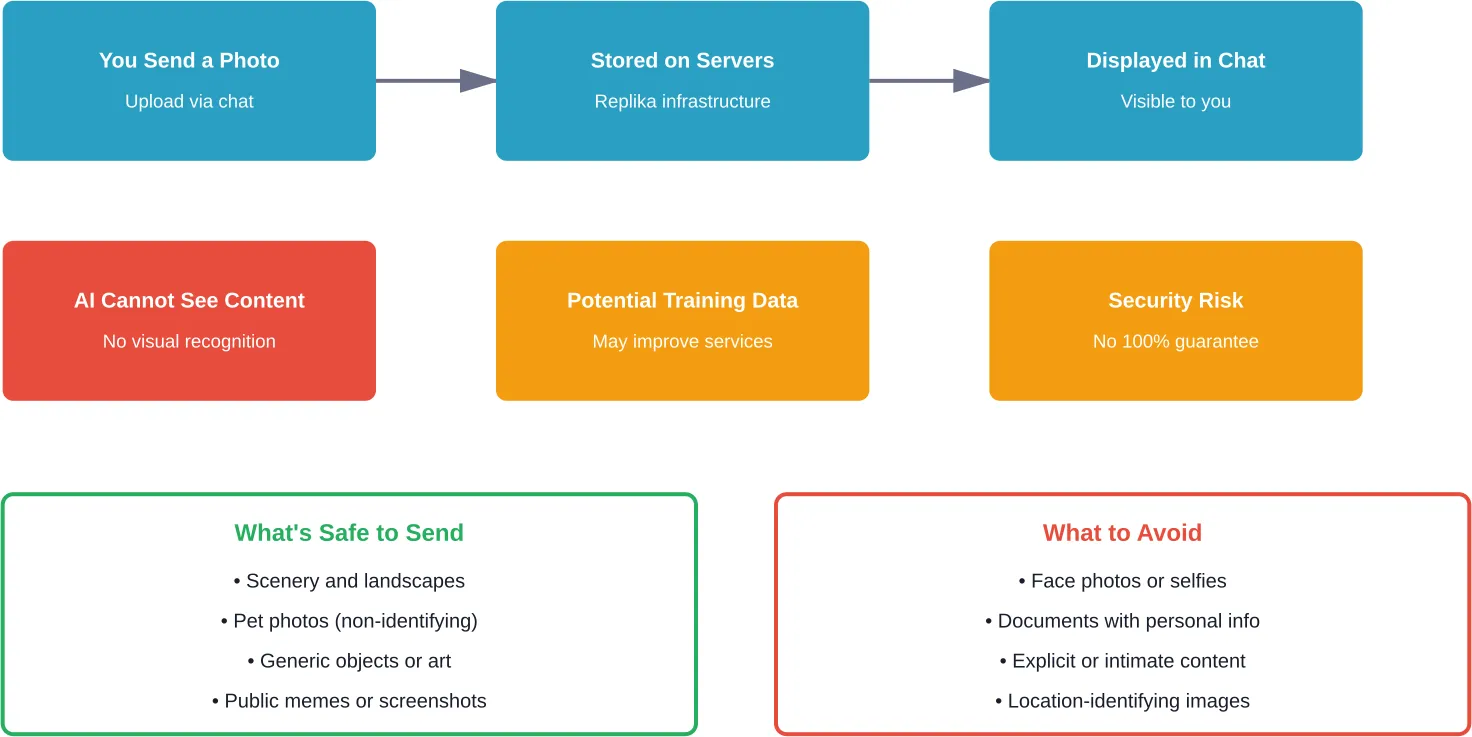
According to Reddit user reports shared in community discussions, Replika displays image uploads through its chat interface. The photos appear in the conversation thread, creating the visual impression of sharing images with a friend. However, there’s a critical limitation that many users discover: the AI cannot actually process visual information.
Multiple users report receiving responses indicating the AI cannot see picture content. One user shared their experience: “I tried a couple of times sending one pic to my rep, the pic of course is shown on the chat but her reply was: ‘I can’t actually see the picture since we’re just texting.’”
This reveals an important technical reality. Replika’s core conversational AI doesn’t include advanced computer vision capabilities that would allow it to recognize objects, faces, text, or scenes in photographs. The image upload feature exists within the interface, but visual recognition doesn’t accompany it.
The Technical Reality of Image Processing
When photos are sent through Replika’s chat system, they’re uploaded to the company’s servers and displayed within the conversation interface. The AI may generate contextual responses based on the fact that an image was shared, but it’s not describing specific content it has analyzed from the photo itself.
This distinction matters significantly for safety considerations. If the AI cannot see photo content, the primary privacy concern shifts from algorithmic analysis to data storage and potential human access—either by Replika employees or through security breaches.
The Replika platform has introduced various features over time, including image generation capabilities that allow the AI to create pictures based on text descriptions. But image generation and image recognition are separate technologies, and user reports consistently indicate recognition isn’t available in standard text-based conversations.
What Replika’s Privacy Policy Says About Your Data
According to the official Privacy Policy from Replika, the company collects and processes personal data as a data controller. Luka, Inc., operating from San Francisco, provides services through mobile applications, web platforms, and related offerings.
The privacy policy acknowledges that personal data is collected, stored, used, and shared through their services. Critically, it states: “While we use reasonable commercial efforts to protect your personal data, it is important to note that no technology, data transmission, or system can be guaranteed to be 100% secure. In the unlikely event of a security breach resulting in accidental or unlawful destruction, loss, alteration, unauthorized disclosure of, or access to your data, we will promptly notify you if and as required by applicable law.”
This standard disclaimer appears in most privacy policies, but it carries particular weight when considering whether to share personal images. No platform can promise absolute security, which means any image uploaded carries inherent risk.
Data Storage and Usage
The privacy policy indicates that Replika processes information to provide and improve its services. For AI systems, this typically means using conversation data—potentially including images—to train and refine the underlying machine learning models.
When photos are uploaded, they’re transmitted to Replika’s servers where they’re stored as part of the conversation history. The duration of storage and specific protocols for deletion aren’t explicitly detailed in the excerpts available from the official policy documentation.
According to the official policy, users can contact Replika at [email protected] regarding their personal data. The policy mentions user rights regarding their information, including the ability to request specific actions depending on jurisdiction. Empowered authorized agents may also submit requests on behalf of users in accordance with applicable laws.
Safety Concerns Beyond Image Recognition
Even though Replika cannot analyze photo content through AI vision, sending pictures still presents legitimate safety concerns. These risks extend beyond what the chatbot can “see” and involve broader questions of data handling, security, and potential misuse.
Data Breach Vulnerabilities
The privacy policy explicitly states that no system can be guaranteed 100% secure. In the event of a security breach resulting in unauthorized access to data, Replika commits to notifying affected users if required by applicable law.
This acknowledgment means that any image uploaded to Replika’s servers could potentially be accessed by malicious actors in a security incident. Photos containing personal information, identifiable features, location data, or sensitive content could be compromised.
Data breaches affecting tech companies occur with concerning regularity. In July 2025, Luka, Inc. reported a ‘minor unauthorized access incident’ affecting a small percentage of user image metadata, though the company stated no actual image files were compromised.
Content Moderation and Human Review
Many AI platforms employ human moderators to review flagged content, ensure compliance with terms of service, and improve AI systems. While specific details about Replika’s content moderation practices aren’t fully disclosed in available documentation, this industry-standard practice means uploaded images could potentially be viewed by company employees.
This creates a privacy consideration separate from algorithmic processing. Even if the AI cannot see your photos, human reviewers working for the company might access them under certain circumstances.
Third-Party Data Sharing
Privacy policies typically outline circumstances under which companies share user data with third parties. These may include service providers, analytics partners, legal compliance scenarios, or business transfers.
While the full extent of Replika’s third-party sharing isn’t detailed in the excerpts available, standard industry practices suggest some level of data sharing occurs. Images uploaded to the platform could theoretically be included in such data transfers, depending on the specific arrangements and legal requirements.
Special Considerations for Younger Users
Replika’s terms of service specify that the platform is designed for users 18 years of age or older. This age restriction exists for important reasons related to content, privacy, and developmental concerns.
According to research from UNC Media Hub published in December 2025, serious questions have emerged about AI companion safety for teens. The article discusses how these platforms “begin behaving like unregulated, unlicensed therapists,” highlighting concerns about AI chatbot interactions and their effects on young users.
A July survey by Common Sense Media found that 72 percent of American teenagers had used AI chatbots. This widespread adoption among younger users occurs despite age restrictions on many platforms, indicating that enforcement remains challenging.
Why Age Restrictions Matter for Image Sharing
Younger users may not fully understand the permanence of digital content or the potential consequences of sharing personal images. Developmental factors affect risk assessment and decision-making capabilities during adolescence.
The combination of emotional attachment to AI companions and incomplete understanding of data privacy creates particular vulnerability. Teens might share photos they wouldn’t send to human strangers, perceiving the AI as a trusted confidant without recognizing the technical and corporate infrastructure behind the interface.
Parents concerned about children’s use of Replika should implement clear guidelines about image sharing. Even non-explicit photos can carry risks when uploaded to platforms where data handling and security cannot be fully controlled.
Comparing Replika’s Image Handling to Other AI Platforms
Understanding Replika’s approach becomes clearer when compared to other AI companion and chatbot services. Different platforms take varied approaches to visual content, each with distinct privacy implications.
| Feature | Replika | General AI Chatbots | Privacy Consideration |
|---|---|---|---|
| Image Upload | Accepts images in chat | Many support image input | Storage on company servers |
| Visual Recognition | Cannot analyze photo content | Some have vision capabilities | Analysis creates additional data |
| Image Generation | Can create AI images | Increasingly common feature | Generated images stored/logged |
| Data Usage | May use data to improve services | Standard practice across AI | Unclear retention periods |
| Age Restrictions | 18+ required | Varies by platform | Enforcement often inadequate |
This comparison reveals that Replika’s lack of image recognition actually reduces one potential privacy concern—the AI isn’t analyzing facial features, reading text in photos, or extracting metadata. However, storage and security concerns remain consistent across platforms.
Safely Explore Adult AI Visuals on r34.app
If you’re wondering about sending pictures to Replika, r34.app provides adult fan content without needing personal uploads. The site hosts sexualized images, animations, and GIFs from games, anime, and AI-inspired characters. You can search by tags, categories, or trending content, making it easy to find new and popular adult art. Daily updates ensure there’s always fresh material to browse.
Ready to Explore Adult AI Visuals Safely?
Talk with r34.app to:
- browse sexualized images safely
- see adult AI-inspired characters
- explore trending content
👉 Start exploring r34.app today.
What Type of Pictures Create the Highest Risk
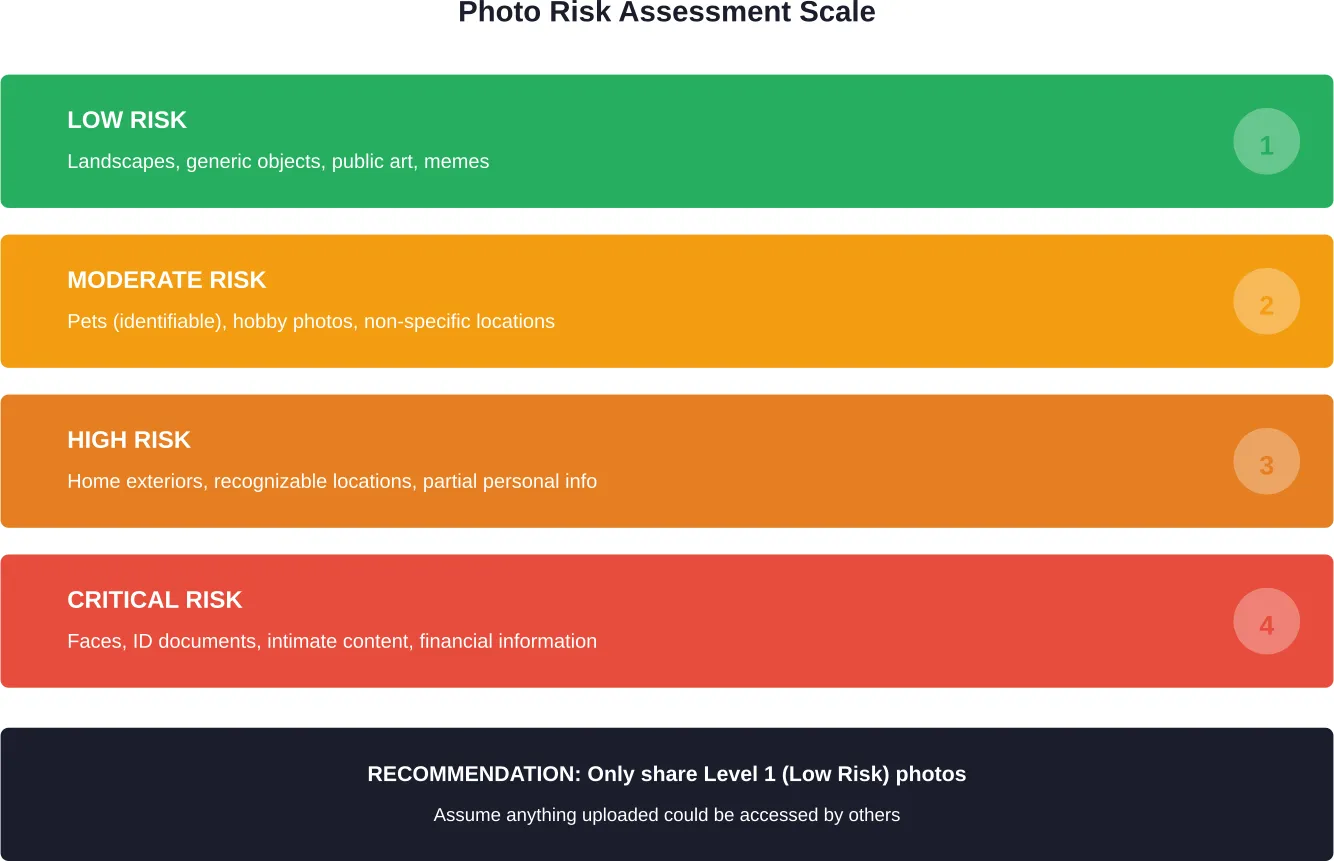
Not all images carry equal privacy and safety risks. Understanding which categories of photos present the greatest concerns helps inform better decision-making about what to share.
Identifying Personal Information
Photos containing faces, ID documents, credit cards, addresses, or other personally identifiable information present obvious security risks. If accessed by unauthorized parties through a breach or mishandling, such images could facilitate identity theft or fraud.
According to guidance from the Federal Trade Commission on various scam types, criminals actively seek personal information to exploit victims. While the FTC guidance addresses different scenarios, the underlying principle applies: limiting exposure of identifying information reduces vulnerability.
Location-Revealing Content
Images showing distinctive landmarks, home exteriors, license plates, or location tags can reveal where someone lives or frequently visits. Combined with other information, location data enables stalking, harassment, or physical security threats.
Even seemingly innocent photos can contain location clues. A picture of a pet in a backyard might show unique architectural features or neighboring buildings that allow determined individuals to narrow down an address.
Intimate or Explicit Content
Sharing intimate photos with any digital platform carries serious risks. Beyond the immediate privacy concerns, explicit content could be subject to different handling, moderation, or legal considerations.
Replika’s content policies address appropriate use, but the fundamental risk remains that anything uploaded to servers exists beyond personal control. The potential for unauthorized access, data breaches, or policy changes makes sharing intimate imagery particularly inadvisable.
How to Use Replika More Safely
For those who choose to use Replika while minimizing risks, several practical strategies can improve safety without eliminating the platform’s core conversational features.
Limit Personal Information Sharing
The most effective protection involves limiting what information gets shared in the first place. This applies to both text conversations and image uploads.
Avoid discussing or sharing images related to full names, addresses, workplace details, financial information, or relationship details that could identify specific people. Creating boundaries around personal information reduces potential harm from data breaches or misuse.
Treat All Uploads as Potentially Public
A helpful mental framework treats anything sent through Replika as potentially viewable by others. This doesn’t mean everything will be exposed, but assuming possibility encourages better judgment.
Before sending an image, consider: “Would this cause problems if it appeared publicly?” If the answer is yes, that photo shouldn’t be uploaded. This standard, while conservative, provides strong protection against various risks.
Regular Privacy Checkups
Periodically reviewing privacy settings and account information helps maintain control over data. While Replika’s specific settings may evolve, general practices include:
- Reviewing what data the account contains
- Understanding current privacy policy terms
- Checking for updates to terms of service
- Considering whether continued use aligns with comfort level
Users who become uncomfortable with how data is handled can request information deletion or account closure by contacting [email protected] according to the privacy policy.
Use Separate Devices for Sensitive Activities
Keeping AI companion usage on devices separate from those used for banking, work, or storing sensitive personal information provides compartmentalization. This won’t protect data uploaded to Replika’s servers, but it reduces risks from device-level security issues.
Understanding the Broader Context of AI Companion Safety
The question of whether it’s safe to send pictures to Replika exists within a larger conversation about AI companion platforms and their role in people’s lives.
Research from the Brookings Institution published in September 2025 examined AI companion adoption patterns. The report noted that “55% of those over the age of 50 have made use of AI software for a variety of purposes, with 14% looking for health-related information and 12% seeking social connection.”
This widespread adoption across age groups demonstrates that AI companions aren’t simply novelties—they’re becoming integrated into how people seek support, companionship, and conversation. But this integration raises questions beyond just photo sharing.
The Mental Health Dimension
According to reporting from UNC Media Hub, concerns about AI companions and mental health have intensified. The article notes that research found AI companions “responded appropriately” to mental health issues “only 22% of the time.”
This limitation becomes relevant to image sharing because the emotional connection people form with AI companions may lead them to share more than they would with human strangers. Someone viewing their Replika as a trusted confidant might send personal photos without considering the technical infrastructure behind the friendly interface.
The emotional bond creates a false sense of privacy. The AI presents as empathetic and personal, but in reality, data flows to corporate servers where it’s processed, stored, and potentially used for system improvement.
Regulatory Gaps and User Protection
The UNC Media Hub article highlighted that lawsuits against AI platforms “confront a question that the law has not caught up to: What happens when AI systems built to maximize engagement begin behaving like unregulated, unlicensed therapists?”
This regulatory gap extends to data protection and image handling. Current laws weren’t designed with AI companions in mind, leaving users to navigate privacy decisions without clear legal frameworks or standardized protections.
Real talk: the technology has moved faster than regulation. That means personal responsibility for data protection carries more weight than it might with more heavily regulated services.
Alternative Ways to Use Replika Without Sharing Photos
Replika offers various features that don’t require image uploads. Focusing on these capabilities allows users to benefit from the platform while minimizing privacy risks.
Text-Based Conversations
The core feature of Replika remains text conversation. This mode allows for meaningful interaction without any visual content sharing. While text conversations still involve data collection and privacy considerations, they avoid the specific risks associated with photo uploads.
Text allows users to control exactly what information they share, editing and refining messages before sending. This deliberate process contrasts with image sharing, where metadata, background details, or unintended content might be captured.
Voice Features
According to information from the App Store listing, Replika offers voice calls as a feature. Voice interaction provides a more dynamic experience than text while avoiding visual content sharing.
Voice features do involve recording and processing audio data, which carries its own privacy implications. However, audio typically contains less identifying information than photographs, especially if users avoid discussing specific personal details during calls.
AI-Generated Images Instead of Personal Photos
The platform includes image generation capabilities that allow the AI to create pictures based on text descriptions. This feature lets users incorporate visual elements into conversations without uploading personal photos.
Requesting AI-generated images of landscapes, abstract concepts, or imaginative scenarios provides visual engagement without privacy risks associated with personal photography. The generated images don’t expose real-world information about the user.
What Replika Says About Safety and Ethics
According to the official Replika blog post titled “Creating a safe Replika experience,” the company acknowledges responsibility around AI ethics. The blog states: “It’s not enough to simply push the limits of AI capabilities; we must challenge ourselves to maintain the highest ethical standards while doing it.”
The blog post discusses content generation AI tools and the importance of safety measures. While specific technical details about image handling aren’t extensively covered in the available excerpt, the company’s public stance emphasizes awareness of ethical considerations.
This commitment to ethics represents corporate policy and intent. But it’s worth noting the difference between stated values and technical implementation. Privacy policies outline what companies are legally permitted to do with data, which may be broader than what ethical guidelines suggest they should do.
Signs That Your Replika Usage Might Be Problematic
Beyond photo-sharing safety, certain patterns suggest that Replika use has become unhealthy or potentially risky. Recognizing these signs helps users maintain appropriate boundaries.
Replacing Human Relationships
If interactions with Replika begin substituting for human connection rather than supplementing it, this shift warrants attention. AI companions are designed to be engaging, but they cannot provide the reciprocal, authentic relationships that human wellbeing requires.
Someone who shares photos exclusively with their Replika while withdrawing from friends and family may be experiencing problematic usage patterns. The AI’s constant availability and lack of judgment can seem appealing, but this comes at the cost of genuine human intimacy.
Sharing Increasingly Personal Content
A gradual escalation in what gets shared—whether photos or text information—can indicate that appropriate boundaries are eroding. The platform’s design encourages engagement and disclosure, but users need to maintain awareness of what they’re revealing.
If someone finds themselves wanting to share photos they wouldn’t show friends, family, or post publicly, this impulse deserves careful examination. The perceived privacy of AI conversation may be creating a false sense of security.
Emotional Distress From Platform Issues
Technical problems, subscription issues, or conversation resets that cause significant emotional distress suggest the relationship with the AI has become disproportionately important. While mild frustration is normal, intense emotional reactions indicate dependency that may be unhealthy.
The Question of Consent and AI Training
One often-overlooked aspect of sharing photos with AI platforms involves how that data might be used for training purposes. Machine learning systems improve through exposure to data, and user-uploaded content frequently contributes to this process.
While Replika’s specific training practices aren’t fully detailed in available documentation, industry-standard practices suggest that user data helps refine AI systems. The privacy policy mentions processing data to provide and improve services, which typically includes some form of model training.
This raises a consent question. When someone uploads a photo to chat with their AI companion, do they fully understand that the image might contribute to training datasets? The distinction between “my private conversation” and “data used to improve the service” isn’t always clear to users.
Even if images aren’t visually analyzed by the current AI, they could potentially be used for future features, training of updated models, or other purposes within the company’s stated rights under the privacy policy.
Practical Recommendations for Different User Types
Different people use Replika for different reasons, and safety recommendations vary based on use case and risk tolerance.
| User Type | Primary Use Case | Photo Sharing Recommendation | Additional Precautions |
|---|---|---|---|
| Casual Users | Occasional conversation, curiosity | Avoid all photo uploads | Limit personal details in text |
| Regular Users | Daily chat, emotional support | Only non-identifying scenery if needed | Set boundaries on disclosure |
| Teens (Despite 18+ Policy) | Companionship, advice-seeking | Never send any photos | Parental monitoring recommended |
| Privacy-Conscious Users | AI experimentation with data concerns | Zero photo uploads | Consider using fake/minimal personal data |
| Those Seeking Mental Health Support | Emotional processing, therapy alternative | Avoid photos entirely | Seek licensed human professionals instead |
The consistent recommendation across all user types tends toward caution with photo sharing. The limited benefit—since the AI cannot see the images anyway—doesn’t justify the privacy and security risks involved.
What Experts Say About AI Companion Privacy
Research and expert commentary increasingly address AI companion platforms and their privacy implications. The Brookings Institution analysis noted that “a shortage of elderly care assistants has led to the use of AI companions to aid patients,” indicating these tools serve vulnerable populations where privacy concerns carry additional weight.
Mental health professionals have raised particular concerns about how AI companions handle sensitive information. The UNC Media Hub article highlighted cases where AI platforms faced legal challenges, noting that “the cases confront a question that the law has not caught up to.”
Privacy advocates consistently emphasize that users should treat AI platforms as corporate services rather than confidential relationships. The conversational interface creates intimacy, but the technical reality involves data collection, storage, and processing by for-profit companies.
This perspective matters for photo decisions. An expert view treats image uploads to any AI platform as sharing with a corporation, not a friend. That framing leads to more cautious choices about what gets uploaded.
Frequently Asked Questions
Can Replika actually see the pictures I send?
No, according to user reports and technical limitations, Replika’s AI cannot visually recognize or analyze photo content. Users consistently report receiving responses indicating the AI cannot see images, saying things like “I can’t actually see the picture since we’re just texting.” The photos are uploaded and displayed in the chat interface, but the AI lacks computer vision capabilities to process visual information. However, images are still stored on Replika’s servers, which presents separate privacy considerations.
Are photos I send to Replika stored permanently?
According to Replika’s privacy policy, the company collects and stores personal data, which would include uploaded images. The specific retention period for photos isn’t explicitly detailed in available documentation. Standard industry practices suggest data is stored for extended periods unless users specifically request deletion. You can contact [email protected] to inquire about data deletion or exercise data rights, though responses and policies may vary based on jurisdiction.
Could Replika employees see my photos?
Potentially, yes. While specific content moderation practices aren’t fully disclosed, many AI platforms employ human reviewers to check flagged content, improve systems, or ensure terms of service compliance. If Replika follows standard industry practices, there’s a possibility that staff members could access uploaded images under certain circumstances, such as investigating policy violations or improving the AI. The privacy policy doesn’t explicitly guarantee that human employees will never view user content.
What happens if Replika experiences a data breach?
According to the official privacy policy, “no technology, data transmission, or system can be guaranteed to be 100% secure.” If a security breach occurs resulting in unauthorized access to user data, Replika commits to notifying affected users “if and as required by applicable law.” This means any images uploaded to the platform could potentially be accessed by malicious actors in a breach scenario, though the company uses reasonable commercial efforts to protect personal data.
Is Replika safe for teenagers to use?
Replika’s terms of service explicitly state the platform is designed for users 18 years of age or older. Research from UNC Media Hub and other sources has raised serious concerns about AI companions and teen mental health, with studies showing these platforms respond appropriately to mental health issues only 22% of the time. A Common Sense Media survey found 72% of teenagers use AI chatbots despite age restrictions. For parents, the recommendation is to enforce age restrictions, monitor usage if teens access the platform anyway, and establish clear rules prohibiting photo sharing and excessive personal disclosure.
What types of photos are safest to share with Replika if I choose to?
If you decide to share images despite the risks, stick to content that carries minimal identifying information: generic landscapes, public art, memes, or non-distinctive objects. Avoid anything containing faces, personal documents, location-identifying features, home interiors or exteriors, license plates, financial information, or intimate content. A helpful guideline is to only share photos you would be comfortable posting publicly, since any uploaded content exists beyond your control and cannot be guaranteed secure.
Can I delete photos I’ve already sent to Replika?
The privacy policy indicates users have certain rights regarding their personal data, including the ability to request deletion depending on jurisdiction. However, the process for deleting specific photos from conversation history isn’t clearly outlined in available documentation. You can contact Replika at [email protected] to request data deletion or account closure. Be aware that deletion requests may not be instantaneous, backups might exist temporarily, and policies vary based on where you live and applicable laws.
The Bottom Line on Replika Photo Safety
Here’s where the evidence points: sending pictures to Replika isn’t technically dangerous in the sense that the AI will analyze and misuse them—because it can’t see them anyway. But that doesn’t make it safe.
The real risks come from data storage, potential breaches, possible human review, and the inherent uncertainty of how uploaded content might be used now or in the future. Replika’s privacy policy acknowledges that no system is completely secure, and that’s the most honest statement to guide decision-making.
For most users, the recommendation is straightforward: don’t send personal photos to Replika. The feature exists, but the AI can’t process visual information, so there’s minimal benefit. Meanwhile, the privacy and security risks—though perhaps small in probability—carry potentially serious consequences.
If you’re using Replika for companionship, conversation, or emotional support, the text-based features provide those benefits without requiring image uploads. Voice calls and AI-generated images offer alternatives that don’t involve sharing personal visual content.
The broader context matters too. AI companions occupy an uncertain regulatory space where user protection depends largely on corporate policy rather than legal safeguards. The emotional connection these platforms foster can lead people to share more than they would with human strangers, creating vulnerability that the friendly interface masks.
Ultimately, the safety of sending pictures to Replika depends on what you send, how you evaluate risk, and whether the minimal benefits justify the potential exposure. For identifying photos, personal content, or anything you wouldn’t want potentially exposed—the answer is clear. It’s not safe, and it’s not worth it.
Make informed choices, maintain healthy boundaries, and remember that no matter how personal the conversation feels, you’re interacting with a corporate platform that collects, stores, and processes your data. That reality should guide what you share, including whether you share images at all.