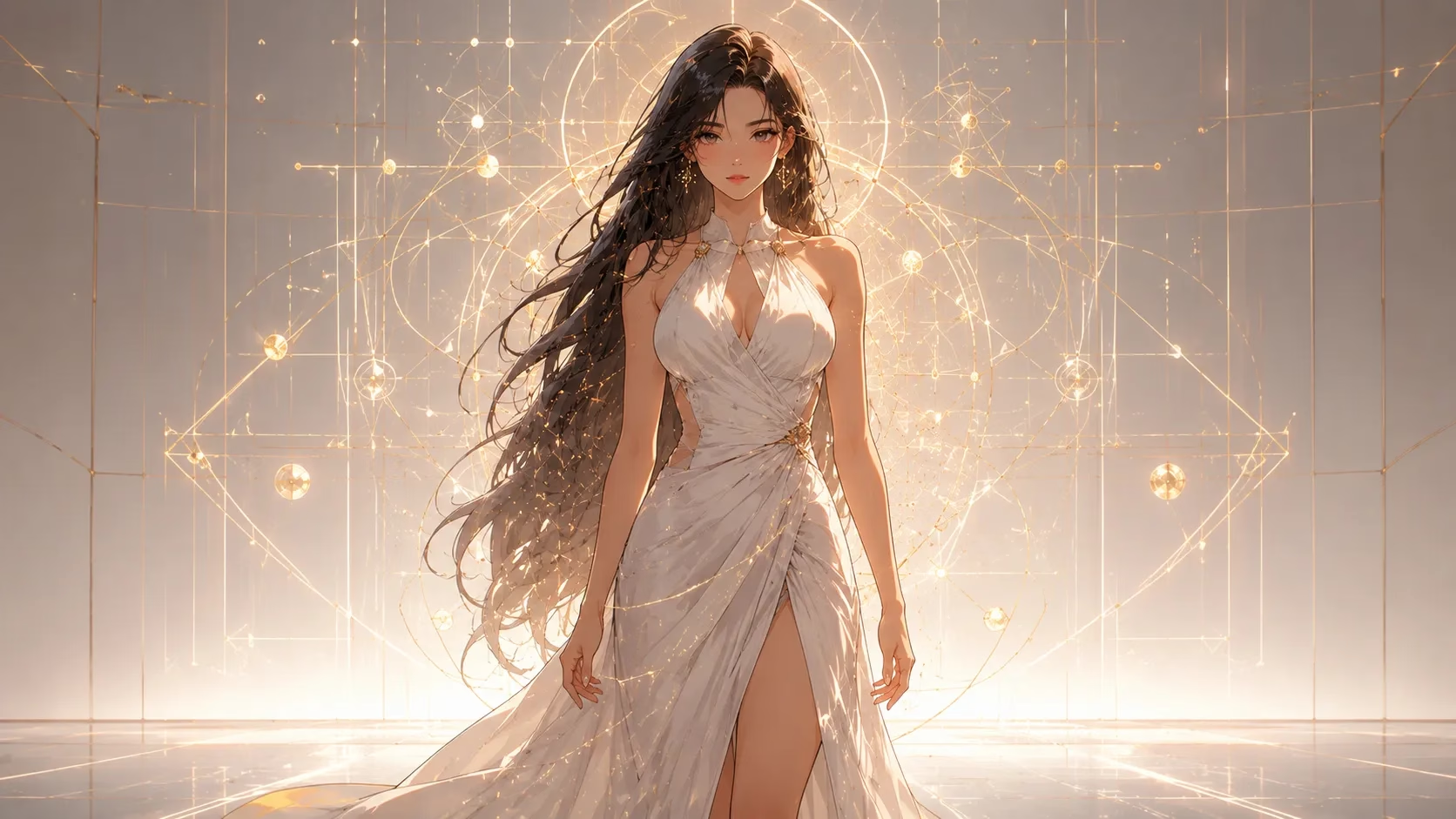
Quick Summary: SoulGen does not publicly disclose the specific AI model architecture powering its image and video generation platform. The tool appears to use proprietary diffusion-based models optimized for character creation, with capabilities spanning text-to-image, image-to-video, and lip-sync animation. SoulGen currently holds approximately 5% of the AI image generation market, positioning itself as a specialized player alongside industry leaders like DALL-E, Midjourney, and Stable Diffusion.
The AI image generation landscape has exploded over the past few years. SoulGen has carved out its niche as a specialized tool focused on character creation and video generation. But what’s actually running under the hood?
Unlike major players such as OpenAI or Stability AI, SoulGen hasn’t published detailed technical papers about its model architecture. That leaves many wondering exactly what technology powers this platform.
The Technology Behind SoulGen
While SoulGen keeps its exact model architecture proprietary, the platform exhibits characteristics consistent with diffusion-based models. These models work by learning to reverse a gradual noising process, ultimately generating coherent images from random noise guided by text prompts.
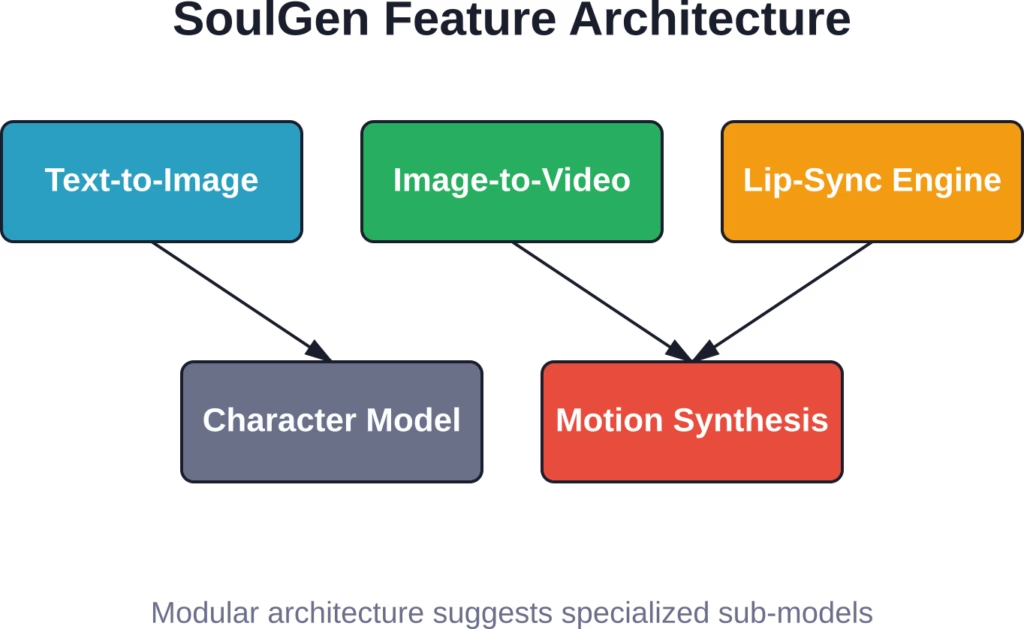
The platform supports multiple generation modes—text-to-image, image-to-video, and talking character animation with realistic lip-sync. This suggests a multi-model system rather than a single monolithic architecture.
Here’s the thing though—SoulGen differentiates itself through specialization. While general-purpose generators like Stable Diffusion excel at diverse content, SoulGen optimizes specifically for character creation, particularly anime and realistic human figures.
Core Capabilities and Features
SoulGen’s feature set reveals clues about its underlying technology:
- Text-to-image generation for realistic and anime characters
- Image-to-video conversion with natural motion and sound
- Talking video generation with lip-sync technology (up to 20 seconds)
- Image editing and manipulation tools
- Lookalike character creation from uploaded photos
The lip-sync and animation capabilities point toward integration of motion synthesis models, likely separate from the core image generation system. This modular approach is common among platforms that offer both static and dynamic content creation.
Explore Tag-Based Content With R34.app
AI generators rely on models to create images, while some platforms focus on helping users find existing content. R34.app is a tag-based browser that organizes NSFW content by character, series, game, and keyword.
Curious About NSFW Content Discovery?
R34.app includes:
- searches by character, series, or keyword
- content organized through tags and categories
- browsing across multiple sources in one place
👉 Visit R34.app to explore its tag-based browsing system.
SoulGen’s Market Position
Understanding SoulGen’s competitive landscape helps contextualize its technical approach. The AI image generation market is experiencing significant growth with projections of expansion through 2030.
SoulGen holds approximately 5% of this market. Here’s how the major players stack up:
| Platform | Market Share | Primary Focus |
|---|---|---|
| OpenAI (DALL-E) | 35% | General-purpose image generation |
| Stability AI | 30% | Open-source diffusion models |
| Midjourney | 20% | Artistic and creative imagery |
| Adobe | 5% | Professional creative tools |
| SoulGen | 5% | Character and video generation |
| Others | 5% | Various specialized tools |
This distribution shows SoulGen competing directly with Adobe’s Firefly in the 5% tier, but targeting a different user base. While Adobe serves professional creative workflows, SoulGen focuses on character-centric content creation.
How SoulGen Compares to Open-Source Models
The open-source AI image generation ecosystem has matured significantly. Stable Diffusion 3.5 Large represents the current state-of-the-art in open models, offering excellent photorealistic generation with improved text rendering.
SoulGen takes a different approach. Rather than competing on versatility, it optimizes for a narrow use case: creating consistent, appealing characters and animating them. This specialization likely allows for more aggressive fine-tuning and optimization than general-purpose models can achieve.
Real talk: SoulGen’s proprietary nature means developers can’t inspect, modify, or self-host the models. For users who need transparency or on-premise deployment, open-source alternatives remain essential. But for those prioritizing ease-of-use and character-specific output quality, the trade-off may be acceptable.
Security and Privacy Considerations
According to Nudge Security’s vendor risk assessment, SoulGen maintains multiple security certifications.
Key security details to consider:
- Authentication via standard methods (no detailed SSO information publicly available)
- Terms of service and privacy policy present but warrant careful review
- According to security documentation, SoulGen maintains both a Bug Bounty program and Vulnerability Disclosure policy
- Hosting location details not prominently disclosed
For professional or sensitive use cases, thorough security documentation review is recommended. Personal or creative projects face lower risk profiles.
Technical Limitations and Trade-offs
No platform is perfect. SoulGen’s focus on character creation means accepting certain constraints:
SoulGen generates HD videos in multiple resolutions (720p & 1080p) up to 20 seconds in length. While sufficient for social media clips or character previews, longer-form content requires multiple generations and manual editing.
The proprietary model means no fine-tuning. Users who need highly specific aesthetic control or brand-consistent outputs may find the platform limiting compared to fine-tunable open models.
Output resolution tops out at 1080p for video. That’s adequate for web content and social platforms, but falls short of 4K requirements for professional video production.
Frequently Asked Questions
Does SoulGen use Stable Diffusion?
SoulGen has not publicly confirmed whether it uses Stable Diffusion or a proprietary model architecture. The platform exhibits characteristics consistent with diffusion-based approaches, but the exact model remains undisclosed. The specialized character-generation capabilities suggest custom training or significant fine-tuning beyond standard Stable Diffusion checkpoints.
Can I use SoulGen-generated content commercially?
Commercial usage rights depend on SoulGen’s current terms of service. Users should review the official terms on the SoulGen website before using generated content in commercial projects. Terms for AI-generated content vary widely across platforms and may include restrictions or attribution requirements.
How does SoulGen compare to Midjourney for character creation?
SoulGen specializes in character creation with integrated video capabilities, while Midjourney excels at artistic and stylized imagery. SoulGen offers more direct control over character consistency and provides lip-sync animation tools. Midjourney typically produces higher aesthetic quality for artistic and conceptual work but lacks native video generation features.
Is SoulGen safe to use?
SoulGen appears to be a legitimate platform with multiple security certifications. For personal creative projects, the risk profile is generally low. Organizations should conduct thorough vendor risk assessments and review current security documentation before deploying SoulGen in production environments.
What file formats does SoulGen support for output?
SoulGen generates HD videos in multiple resolutions (720p & 1080p) up to 20 seconds in length. Specific format options and export settings should be verified through the official documentation or platform interface.
Can SoulGen create consistent characters across multiple images?
SoulGen advertises consistent character generation as a core feature. This capability represents a significant technical achievement, as maintaining character consistency across generations remains challenging for many AI image models. The platform’s focus on this use case suggests specialized training or architecture optimized for identity preservation.
Does SoulGen require coding knowledge to use?
No. SoulGen provides a web-based interface designed for users without programming skills. The platform follows a simple workflow: enter a text prompt, adjust settings, and generate. This contrasts with open-source solutions like Stable Diffusion, which often require technical setup and command-line interaction unless accessed through third-party interfaces.
Final Thoughts
SoulGen keeps its model architecture proprietary, but the platform’s capabilities point toward specialized diffusion-based models optimized for character creation and animation. Holding 5% of a rapidly growing market, the platform occupies a niche between general-purpose giants and fully open-source alternatives.
The trade-off is clear: users sacrifice transparency and customization for integrated features and specialized output quality. For creators focused on character-centric content who value simplicity over technical control, that exchange makes sense.
As the AI image generation market continues expanding, platforms like SoulGen will need to balance their proprietary advantages against increasing competition from both established players and emerging open-source projects. The next few years will reveal whether specialization alone provides sufficient competitive moat.
Want to explore SoulGen’s capabilities firsthand? The platform offers a free trial with limited credits—enough to test whether its character generation approach fits specific creative needs.