Quick Summary: Hentai often appears ‘weird’ due to cultural differences between Japan and the West, censorship laws that incentivized creative workarounds like tentacles, and the medium’s freedom from live-action constraints. What Western audiences perceive as bizarre—exaggerated scenarios, fantasy elements, or unconventional themes—reflects different storytelling traditions and the genre’s evolution within Japan’s unique regulatory landscape.
If you’ve stumbled across hentai and thought “what on earth am I looking at?” you’re not alone. The genre has earned a reputation for being bizarre, unsettling, and downright strange to Western audiences. But here’s the thing—what seems weird to outsiders often makes perfect sense within its cultural context.
The hentai industry is notorious for bizarre porn, tentacle plants, and oddly specific scenarios that don’t appear in any other form of adult content. Yet this multi-billion dollar industry continues to grow. So what’s actually going on here?
The answer isn’t simple. It involves centuries of Japanese art history, modern censorship laws, cultural attitudes toward sexuality, and the unique possibilities of animation. Let’s break down why this genre strikes so many people as peculiar.
The Cultural Context Nobody Talks About
Western and Japanese cultures approach sexuality and its depiction fundamentally differently. What registers as “weird” often reflects these deeper cultural divides rather than anything inherently wrong with the content itself.
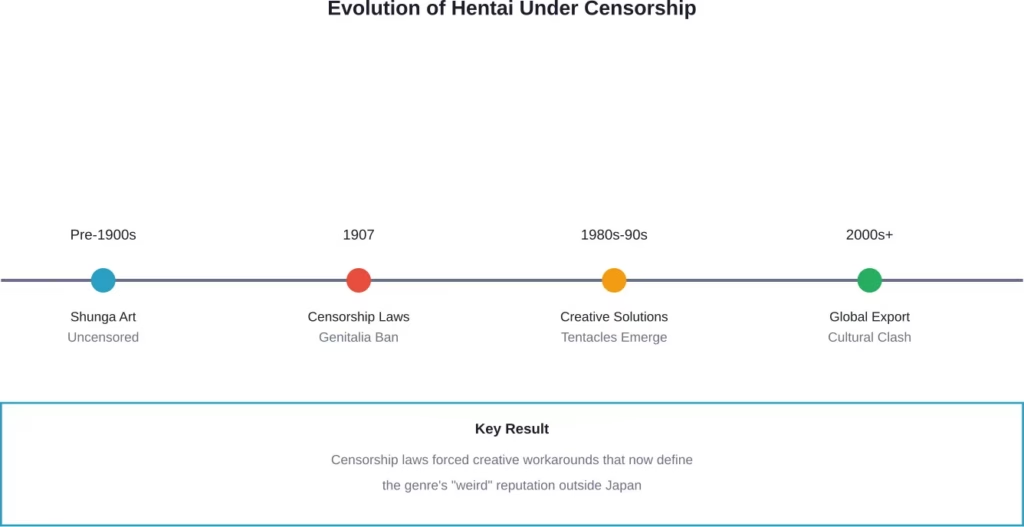
Japan has a long artistic tradition of erotic art called shunga, dating back centuries. These weren’t hidden shame projects—they were legitimate art forms that depicted sexuality with exaggerated features and fantastical elements. Sound familiar?
According to research on anime fans published in 2021 (Transported to Another World: The Psychology of Anime Fans by Stephen Reysen), Western audiences often miss this historical context entirely. They judge hentai through a Western lens that treats explicit content as something fundamentally separate from “real” art or storytelling.
The Animation Advantage
Here’s where things get interesting. Animation removes physical constraints that live-action pornography can’t escape. Bodies can bend in impossible ways. Scenarios can escalate beyond reality. Fantasy becomes literal.
This freedom is precisely what makes hentai appealing to many consumers—but also what makes it seem bizarre to others. There’s no need to adhere to human limitations when your characters are drawn.
According to new research published in the journal Sexologies, people who consume hentai appear to differ on several characteristics from those who consume other types of pornography. However, they don’t appear to differ from others in their attraction toward humans or desire for human relationships. The study was based on survey responses from 208 participants who were 20.90 years old on average. Approximately 29% had consumed hentai in the past year, 38% had consumed non-hentai pornography in the past year.
The Censorship Paradox That Created Tentacles
Now we’re getting to one of the most infamous aspects. Tentacle porn didn’t emerge because Japanese creators have some unique fascination with sea creatures. It was a censorship workaround.
Japanese law prohibits the depiction of genitalia in pornography. This creates an absurd situation where sexual acts are fine, but showing the actual anatomy involved is illegal. Creators had to get creative.
Tentacles became popular because they weren’t technically genitalia—so they could be shown uncensored while performing the same narrative function. What looks utterly bizarre to Western viewers was actually a clever legal loophole.
This same censorship pressure led to other unusual genre conventions. If you can’t show certain body parts clearly, you either blur them out (creating those pixelated mosaics) or you substitute something else entirely. Hence: tentacles, objects, fantasy appendages, and other creative solutions.
Demographics and Psychology of Consumption
Who actually watches this stuff? The data might surprise you.
Research indicates hentai consumption skews younger. According to industry analysis, it’s primarily a “younger generation” thing, with significant consumption among millennials and Gen Z viewers.
But there’s more to it than age. The International Anime Research Project has been studying anime, manga, and related fandoms using techniques from psychology, anthropology, and sociology. Their work reveals anime fans—including hentai consumers—represent diverse demographics.
According to data from their research, the Western anime fandom is primarily White and Asian with other ethnicities scattered throughout. Sexual identity and orientation show complexity: approximately 5.3% to 9% identify as transgender, and about 5% identify as gay or lesbian.
The Parasocial Relationship Factor
Medical research published in 2025 examining deep media attachment shows these relationships can have psychological impacts, though the research on parasocial relationships suggests monitoring patterns rather than assuming dysfunction.
Animated characters offer a unique advantage here. They’re designed to be appealing. They never age. They exist in fantasy scenarios that reality can’t provide. For some consumers, this controlled fantasy aspect is precisely the appeal.
The Economics of Weird: Industry Realities
Here’s something most people don’t know: the hentai industry is one of the lowest-paying entertainment sectors in Japan. Animators working in adult animation see salaries around $9,000 per year. Voice actors receive as little as $150 to $450 per video.
Why does this matter for understanding the “weirdness”? Low budgets mean creators often recycle tropes, lean heavily on established genres, and push boundaries to stand out in a crowded market.
The global anime market size was valued at USD 37,698.9 million in 2025 and is projected to reach USD 77,268.4 million by 2033, growing at a CAGR of 9.2% from 2026 to 2033. The Japan anime market dominated the global market with a share of over 43% in 2025. Based on type, the merchandising segment accounted for the largest revenue share of over 31% in 2025.
| Industry Segment | Annual Compensation | Key Challenge |
|---|---|---|
| Hentai Animators | ~$9,000/year | Low pay despite demand |
| Voice Actors | $150-$450/video | Minimal per-project rates |
| Mainstream Anime | Significantly higher | Better funding |
Piracy compounds these problems. When revenue gets cut by illegal distribution, production values suffer and creators have less incentive to invest in nuanced storytelling.
Genre Conventions That Baffle Western Viewers
Certain recurring themes in hentai strike Western audiences as particularly strange. But many reflect broader Japanese media conventions, not unique pathologies.
Exaggerated reactions and expressions? Standard in anime generally. Specific art styles with large eyes and unusual proportions? Also common across non-adult anime. Certain narrative frameworks and power dynamics? These appear throughout Japanese media, though they’re amplified in adult content.
Community discussions frequently note concerns about consent depictions, particularly in “rough” or “questionable” Japanese adult content. One viewer stated: “When I watch Japanese porn, I’m always kind of like, ‘er’, because of the more aggressive stuff. I’m always worried about consent. It seems kind of iffy and I don’t know whether that’s done ethically and produced well.”
The Fantasy Element Nobody Discusses
Look, here’s the uncomfortable reality: hentai can depict scenarios that would be illegal, impossible, or unethical in live-action. This is precisely what makes many people uncomfortable.
Some hentai content is actually illegal to possess in certain jurisdictions, including parts of the United States, depending on what it depicts. These legal boundaries exist because even fictional depictions can cross lines that societies have established.
The fantasy defense—”it’s just drawings”—has limits. But it’s also true that animation provides an outlet for fantasies that should never involve real people. Where exactly that line sits remains culturally contested.
The Mainstream Crossover Few Acknowledge
Many prominent manga artists and animators started their careers creating hentai or doujinshi (self-published works, often adult). This isn’t a dirty secret—it’s a well-known industry path in Japan.
Lower barriers to entry in adult content meant aspiring artists could build skills, develop audiences, and eventually transition to mainstream work. Some continue doing both. The stigma that exists in Western creative industries doesn’t map directly onto Japanese ones.
There’s also a meaningful difference between hentai manga and hentai doujins. The former involves professional production and distribution. The latter represents independent, often fan-created works that can push boundaries even further.
When Weird Becomes Concerning
Not all the weirdness is harmless cultural difference. Some content crosses lines that deserve scrutiny regardless of cultural context.
Medical research examining media attachment and mental health shows that deep parasocial relationships with fictional characters can have psychological impacts. While most consumption remains recreational, certain patterns can indicate underlying issues.
Research on the impact of anime on children, including those with Autism Spectrum Disorder, suggests these media forms can influence social development and emotional regulation. Parents and caregivers should be aware when young people access adult anime content.
The “creepy side” of hentai—as community discussions often describe it—includes consent issues, unrealistic depictions of sexuality, and content that normalizes problematic scenarios. Animation doesn’t make these concerns disappear.
Explore Hentai from the Side You Want

You won’t understand why hentai feels “weird” just from explanations. It makes sense when you actually go through the tags and see what shows up. Don’t waste time jumping between sites – R34.app gives you one place to search, open results, and move through them.
Start and Keep Going
Here’s why it works better:
- One search leads to more results without restarting
- Tags connect so you keep moving without breaks
- Less time wasted repeating the same steps
- Easier way to keep exploring without losing focus
Go to R34.app and skip the usual back-and-forth.
Frequently Asked Questions
Is hentai consumption normal or healthy?
Research shows hentai consumers don’t differ significantly from other pornography users regarding attraction to humans or desire for real relationships. Moderate consumption appears comparable to other adult content use. However, like any pornography, excessive consumption or preference for extreme content may warrant self-reflection.
Why do tentacles appear so often in hentai?
Tentacles emerged as a workaround for Japanese censorship laws prohibiting clear depiction of genitalia. Since tentacles aren’t technically genitalia, they could be shown uncensored while serving similar narrative functions. What began as legal circumvention became an established genre convention.
Do hentai consumers have trouble with real relationships?
According to research published in Sexologies, hentai consumers show no significant difference from other pornography users in their attraction toward humans or desire for human relationships. The study found no evidence that hentai consumption inherently interferes with real-world relationship capacity.
Is some hentai actually illegal to own?
Yes, certain hentai content is illegal to possess in various jurisdictions, including parts of the United States, depending on what it depicts. Laws vary by location, but content portraying certain acts or character types can violate obscenity statutes even when entirely fictional and animated.
Why does hentai feature such exaggerated art styles?
The exaggerated features—large eyes, unusual proportions, dramatic expressions—reflect broader anime and manga art conventions, not unique characteristics of adult content. These stylistic choices permeate Japanese animation generally, though they’re amplified in hentai for erotic emphasis.
How big is the hentai industry economically?
While specific hentai market figures aren’t isolated, the broader anime market was valued at $37.7 billion in 2025 with projections reaching $77.3 billion by 2033. Japan dominates with over 43% market share, and merchandising represents over 31% of revenue. However, hentai animators paradoxically earn among the lowest wages—around $9,000 annually.
Does watching hentai lead to problematic behaviors?
Research hasn’t established direct causal links between hentai consumption and problematic real-world behaviors. However, like all pornography, content depicting non-consensual scenarios or extreme acts may influence attitudes. Medical research on deep media attachment suggests monitoring consumption patterns for signs of interference with daily functioning or relationships.
Understanding Rather Than Judging
So why is hentai so weird? The answer depends entirely on your perspective.
From a Western viewpoint, it’s bizarre because it violates expectations about pornography, animation, and the boundaries between them. It depicts impossible scenarios with exaggerated features in a medium associated with children’s entertainment.
From a Japanese cultural context, it’s a natural evolution of centuries-old erotic art traditions, filtered through modern censorship requirements and the unique possibilities of animation. What’s “weird” is that other cultures don’t have equivalent forms.
The reality sits somewhere between these perspectives. Yes, cultural differences explain much of the perceived strangeness. Yes, censorship laws created distinctive workarounds. And yes, some content crosses concerning lines regardless of cultural framing.
Research from the International Anime Research Project and psychological studies of fandom shows consumers represent diverse demographics with varying motivations. Generally speaking, most engage with the content recreationally without it indicating deeper issues, though like any adult material, context and patterns matter.
The anime industry continues expanding globally, projected to nearly double in market value by 2033. As it grows, more people will encounter hentai—whether intentionally or accidentally. Understanding why it appears as it does provides useful context for that inevitable exposure.
What seems weird often just reflects unfamiliarity. But that doesn’t mean all content deserves uncritical acceptance either. The key is distinguishing between cultural differences worth understanding and genuine concerns worth addressing.
If you’re exploring this genre or concerned about someone who is, remember that research shows most consumption doesn’t indicate relationship problems or unusual psychology. But also recognize that content matters—and some hentai depicts scenarios that warrant critical examination regardless of their animated nature.
Want to understand more about anime culture, its psychological impacts, or how Japanese media differs from Western counterparts? The research continues to evolve, offering increasingly nuanced insights into this global phenomenon.