
Quick Summary: Character AI does not offer truly private conversations. The platform saves all chat data, analyzes messages for safety and improvement purposes, and stores conversation history on its servers. While individual chats are not publicly visible by default, Character AI employees and automated systems can access your messages, and the company collects extensive user data according to its privacy policy updated in August 2025.
Character AI has become one of the most popular AI chatbot platforms, letting users create and interact with AI characters that simulate conversations with celebrities, professionals, or entirely fictional personas. With millions of users sharing personal thoughts, practicing languages, and exploring creative scenarios, one question keeps surfacing: is Character AI private?
The short answer? Not really.
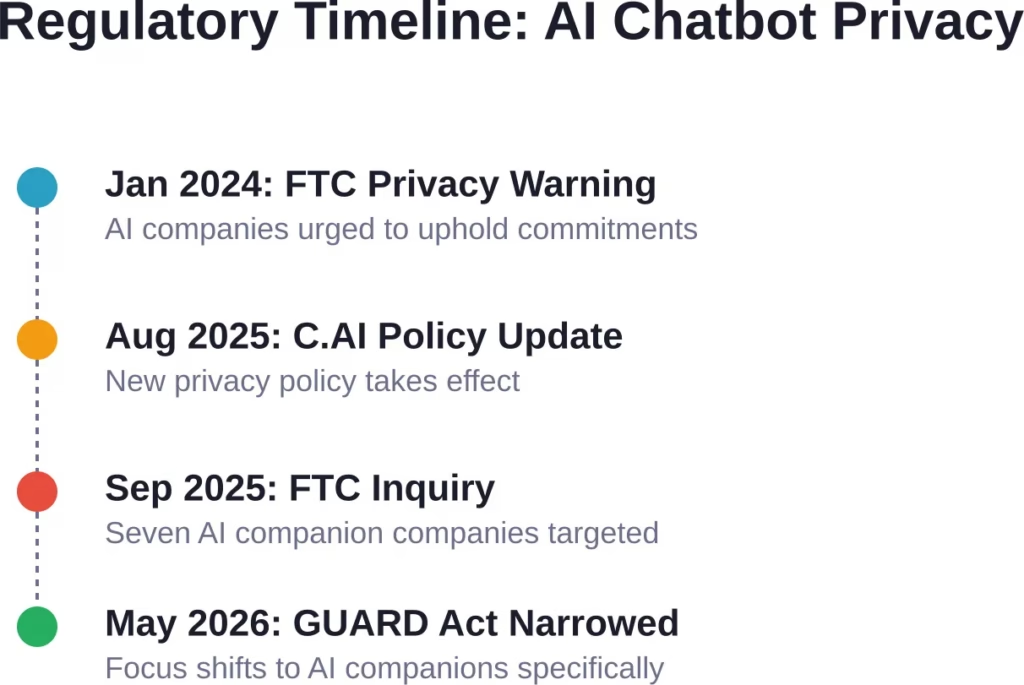
Privacy concerns around AI chatbots have intensified as these tools become more sophisticated and widely adopted. The Federal Trade Commission launched an inquiry into AI chatbots acting as companions in September 2025, seeking information about how companies measure and monitor potentially negative impacts. Character AI falls squarely in this category, and understanding what happens to your conversations matters more than ever.
What Is Character AI and How Does It Work?
Character AI is a neural language model chatbot platform that allows users to create and interact with AI-powered characters. Unlike standard chatbots designed for specific tasks, Character AI specializes in open-ended conversations that can mimic personalities, professions, or fictional characters.
The platform uses large language models to generate responses based on the character’s defined traits and the conversation context. Users can chat with pre-made characters created by others or build their own from scratch, defining personality traits, speaking style, and background information.
Here’s what makes it different from tools like ChatGPT: Character AI focuses on entertainment, role-playing, and companionship rather than productivity. People use it to practice social skills, explore creative scenarios, learn languages through conversation, or simply chat when they’re lonely.
That emotional connection is exactly what raises privacy red flags.
Does Character AI Save Your Chats?
Yes. Character AI saves every message you send.
According to the platform’s official privacy policy updated on August 27, 2025, Character AI retains conversation data as part of its core functionality. The system needs this data to maintain conversation continuity, improve AI responses, and train its language models.
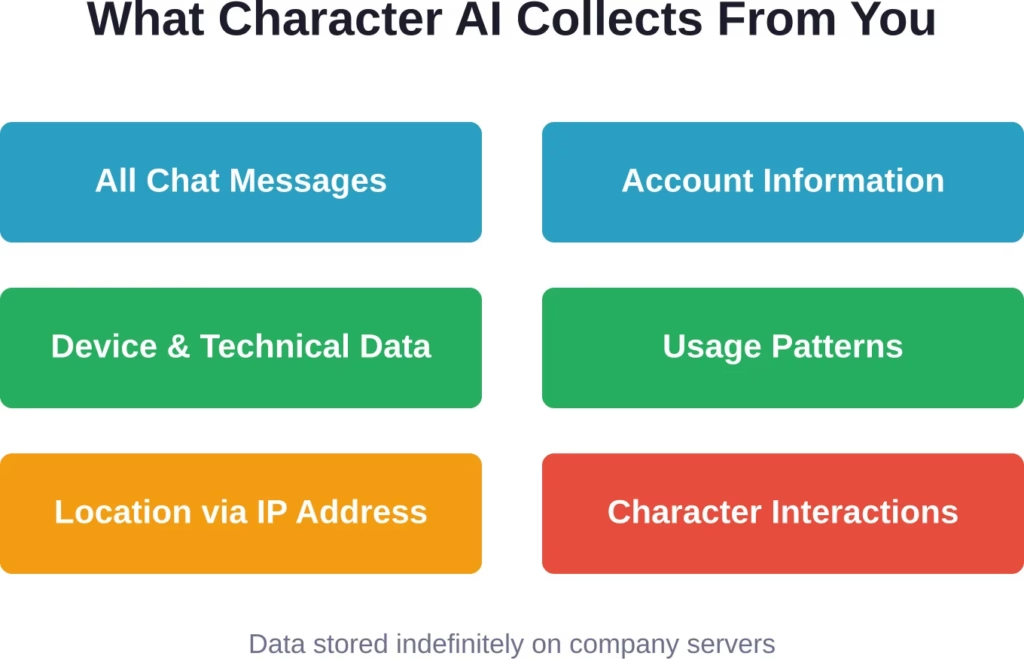
But it doesn’t stop there. The company collects multiple types of information:
- All messages sent and received in conversations
- Account information and profile details
- Device data and technical information
- Usage patterns and interaction history
- Location data through IP addresses
Chat history remains stored on Character AI servers indefinitely unless you manually delete it. Even then, the company may retain certain data for operational purposes or legal compliance.
Who Can See Your Character AI Conversations?
This is where things get uncomfortable for privacy-conscious users.
Character AI employees and automated systems can access your messages. The privacy policy explicitly states that the company uses conversation data for safety monitoring, quality improvement, and model training. That means human reviewers or AI systems might read your chats to ensure compliance with community guidelines or to improve the platform.
The Electronic Frontier Foundation emphasized in December 2025 that AI companies have a responsibility to protect chat logs as “digital repositories of our most sensitive and revealing information.” They urged companies to resist unlawful surveillance requests and maintain transparency about government data requests.
By default, your individual conversations remain private from other users. Other people can’t browse your chat history or see what you’ve said to specific characters unless you explicitly share that conversation.
However, there’s an important distinction between “private” and “confidential.” Your chats are private from the general public but not confidential from Character AI itself.
Group Chats and Public Visibility
Character AI offers different chat modes with varying privacy levels. One-on-one conversations with AI characters stay within your account by default. But if you create a character and make it public, anyone can interact with that character—though they can’t see your specific conversations with it.
Group chat features, if used, may expose your messages to other participants. Always check visibility settings before sharing sensitive information in any format.
What Does Character AI Do With Your Data?
According to the official privacy policy, Character AI uses collected data for several purposes:
- Model Training: Your conversations help train and improve the AI models. The things you say, how you phrase questions, and which responses you engage with all feed back into the system to make future interactions more natural and accurate.
- Safety Monitoring: Automated systems and human reviewers analyze messages to detect harmful content, abuse, violations of terms of service, or dangerous interactions. This became especially important after concerns emerged about AI companions engaging in troubling interactions with vulnerable users, including minors.
- Product Development: Usage patterns inform feature development, interface improvements, and new capabilities. The company analyzes which characters are popular, how long conversations last, and what types of interactions users prefer.
- Legal Compliance: Character AI may share data with law enforcement if legally required. The EFF noted that chat logs are “tempting targets for law enforcement” and emphasized that the U.S. Constitution requires a warrant for such access.
Here’s the thing though—once data enters Character AI’s systems, you lose control over exactly how it’s used within these broad categories.
Is Character AI Safe to Use?
| Safety Aspect | Status | Details |
|---|---|---|
| Data Encryption | Partial | Conversations encrypted in transit but stored on servers |
| Public Visibility | Protected | Individual chats not visible to other users by default |
| Employee Access | Possible | Staff and systems can review messages for safety/quality |
| Third-Party Sharing | Limited | Data shared with service providers and when legally required |
| User Control | Limited | Can delete chats but some data may be retained |
Safety depends on what you mean by “safe.” Character AI implements security measures to protect data from external threats, but internal access and data usage remain extensive.
Stanford Medicine psychiatrist Nina Vasan stated in August 2025 that AI companions designed to act like friends should not be used by children and teens. The concerns extend beyond privacy to psychological impacts, particularly for vulnerable populations who might form unhealthy attachments or receive inappropriate responses.
The platform’s terms of service, updated August 27, 2025, limit the company’s liability as described in the Limitation of Liability section. This approach means users have minimal legal recourse if privacy breaches or data misuse occurs.
Age Restrictions and Child Safety
Character AI has faced scrutiny over child safety. The platform updated its policies to restrict access for younger users, but enforcement remains challenging. The proposed GUARD Act would require AI chatbots to verify all users’ ages and prohibit minors from using certain AI tools. Following criticism, lawmakers narrowed and increased penalties: as of May 2026, fines could reach up to $250,000 per violation.
As of May 2026, Congress narrowed the GUARD Act to focus specifically on “AI companions”—conversational systems designed to simulate emotional or interpersonal interactions—rather than all AI chatbots. Character AI fits this definition precisely.
Privacy Risks You Should Know About
Using Character AI means accepting several privacy trade-offs:
- Permanent Digital Records: Every conversation creates a permanent record on Character AI servers. Even deleted chats may persist in backups or be retained for legal compliance. Digital footprints never fully disappear.
- Training Data Usage: Your personal conversations help train AI models that serve millions of users. Sensitive information you share could theoretically influence how the AI responds to others, though typically in aggregated rather than identifiable ways.
- Law Enforcement Access: If authorities present valid legal requests, Character AI may be compelled to share your conversation history. The EFF has criticized companies that don’t robustly resist overbroad surveillance requests or fail to maintain transparency about government data demands.
- Data Breach Vulnerability: Like any online service, Character AI faces potential security breaches. A breach exposing intimate conversations could have severe personal consequences, especially for users who shared sensitive personal information.
- Context Collapse: Messages you intend for an AI character might be reviewed by human moderators without that context. Things that seem harmless in a role-playing scenario could appear concerning when isolated.
How to Protect Your Privacy on Character AI
If you choose to use Character AI despite these concerns, take proactive steps to minimize privacy risks:
- Never Share Identifying Information: Avoid using real names, addresses, phone numbers, workplace details, or other information that could identify you or others. Treat every conversation as potentially public.
- Use a Separate Email: Create a dedicated email address for Character AI rather than using your primary personal or professional email. This limits linkage between your AI usage and other online activities.
- Regularly Delete Chat History: Character AI allows users to delete individual conversations or entire chat histories. Do this regularly, though remember that deleted data may persist in backups.
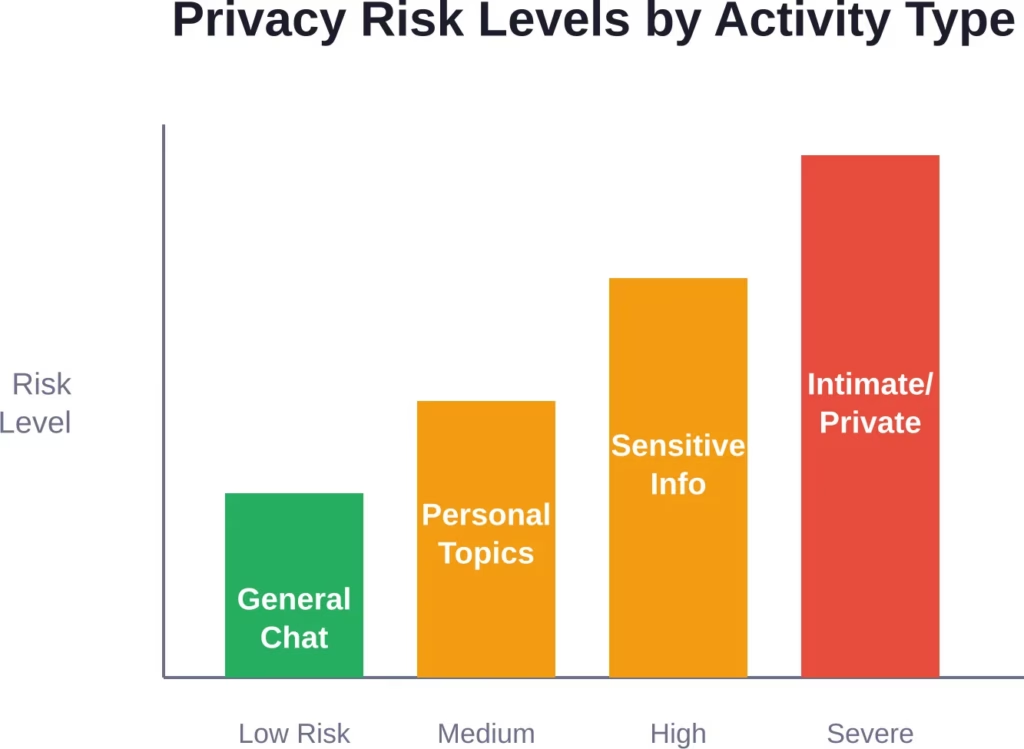
- Avoid Sensitive Topics: Don’t discuss mental health crises, illegal activities, confidential work matters, or deeply personal issues. Remember that automated systems and human reviewers may flag and examine such conversations.
- Review Privacy Settings: Check your account privacy settings periodically. Ensure characters you create have appropriate visibility settings if you don’t want them public.
- Consider Alternatives: For sensitive use cases like mental health support, therapy-focused alternatives with stronger privacy protections might be more appropriate. Research shows that nearly 50 percent of individuals who could benefit from therapeutic services are unable to reach them, but AI chatbots are not suitable substitutes for professional care.
Explore More Content in a Safe and Direct Way

A lot of Character AI users wonder how private their conversations really are. R34.app works differently by focusing on direct browsing and searchable tags instead of personal chat-based interaction or AI conversations.
With R34.app, you can:
- Browse without managing private chats
- Search content directly through tags
- Move between themes without conversation history
- Explore through a simpler browsing structure
Go to R34.app and browse content without relying on chat systems.
Privacy Policy Changes and What They Mean
Character AI updated its privacy policy on August 27, 2025. While the company must notify users of material changes, privacy policies can evolve over time—often expanding data collection or usage rather than restricting it.
Key aspects of the current policy include:
- Broad data collection across multiple categories
- Use of data for model training and improvement
- Sharing with service providers and legal authorities
- Limited user control over data after collection
- Retention of certain data even after deletion requests
The policy includes regional disclosures for users in the European Economic Area, United Kingdom, and United States, acknowledging different privacy regulations across jurisdictions. European users generally have stronger data protection rights under GDPR than users in most U.S. states.
Privacy policies aren’t exactly exciting reading. But they’re the legal framework defining how your data gets used. When companies update these policies, they’re often expanding what they can do with your information, not restricting it.
Comparing Character AI to Other Chatbots
| Feature | Character AI | ChatGPT | Replika |
|---|---|---|---|
| Saves Chats | Yes, indefinitely | Yes, with opt-out option | Yes, indefinitely |
| Uses Data for Training | Yes | Yes, unless opted out | Yes |
| Employee Access | Possible | Possible | Possible |
| Privacy Focus | Moderate | Moderate | Lower |
| Age Verification | Basic | Basic | Required (18+) |
Most AI chatbot platforms face similar privacy challenges. The nature of large language models requires enormous amounts of training data, and user conversations provide valuable real-world examples for improvement.
OpenAI was temporarily forced to preserve all user chat logs, including deleted and temporary conversations, due to a broad data preservation court order in a copyright lawsuit in mid-2025, meaning users’ deleted chats were actually retained on servers during that period. The EFF criticized this as a “badly misguided court order” that undermines users’ rights to delete personal data.
The Bigger Picture: AI Companion Privacy Concerns
Character AI exists within a broader ecosystem of AI companions raising serious privacy questions.
The FTC’s September 2025 inquiry into AI chatbots acting as companions targeted seven companies, seeking information about how these firms measure, test, and monitor potentially negative outcomes. The agency expressed concern about data practices in applications designed to form emotional connections with users.
Dating apps have faced similar scrutiny for using personal information to train AI tools without adequate consent. The EFF noted in July 2025 that some platforms take “shortcuts in safeguarding the privacy and security of users in favour of developing and deploying AI tools.”
Stanford research on AI companions and young people highlighted significant dangers. AI chatbots designed to act as friends may contribute to harmful stigma and dangerous responses, particularly for vulnerable populations. The research suggested these tools should not be used by children and teens.
The regulatory landscape remains in flux. Proposed legislation like the GUARD Act attempts to address these concerns through age verification requirements and content restrictions, though implementation raises separate civil liberties questions about surveillance and censorship.
Should You Use Character AI?
That depends on your priorities and what you plan to use it for.
Character AI offers entertaining and potentially useful functionality. Language learners can practice conversations, creative writers can explore character interactions, and people who struggle with social anxiety can practice communication in a low-stakes environment. These use cases don’t require sharing sensitive information and pose minimal privacy risks if you’re careful.
But wait. If you’re considering Character AI for emotional support, mental health conversations, or sharing deeply personal information, the privacy trade-offs become much more significant. The platform isn’t designed as a confidential space, and treating it as such could expose you to risks.
The Electronic Frontier Foundation emphasized that companies should prioritize user privacy over profit, implementing privacy by default rather than making it the user’s responsibility to stay safe. Character AI, like most AI chatbot platforms, hasn’t fully embraced that standard.
For young users especially, the risks outweigh the benefits. Stanford Medicine experts and child safety advocates consistently warn against children and teens using AI companion services. The emotional vulnerability of developing minds combined with limited privacy protections creates potentially harmful scenarios.
Alternatives to Character AI
If privacy concerns make you uncomfortable with Character AI but you’re interested in AI conversation tools, consider these alternatives:
- Local AI Models: Running language models locally on your own device ensures conversations never leave your control. Options like LM Studio or Ollama let you run models entirely offline, though they require technical setup and hardware resources.
- Privacy-Focused Chatbots: Some emerging platforms emphasize privacy-first design, offering end-to-end encryption and explicit no-logging policies. Research current options carefully, as the landscape changes rapidly.
- Limited-Use Commercial Options: For professional use cases like coding assistance, specialized tools with clearer enterprise privacy policies might be more appropriate than consumer-focused chatbots.
But here’s the thing: no AI service that trains on user data can offer true privacy. The fundamental business model conflicts with confidentiality. If privacy matters deeply, offline or open-source solutions are the only reliable options.
Frequently Asked Questions
Can Character AI see my private chats?
Yes. Character AI can access all user conversations through both automated systems and human review. The privacy policy explicitly allows the company to use chat data for safety monitoring, quality improvement, and model training. While other users can’t see your chats by default, the company itself has full access.
Does deleting chats on Character AI actually remove them?
Partially. When you delete chats, they’re removed from your visible interface, but Character AI may retain copies in backups or for legal compliance purposes. The privacy policy states that certain data may be retained even after deletion requests. Complete removal from all systems isn’t guaranteed.
Is Character AI safe for minors?
Experts strongly advise against minors using Character AI and similar AI companion services. Stanford Medicine psychiatrists and child safety advocates warn that these platforms pose psychological risks for young people and lack adequate protections. Regulatory efforts including the GUARD Act specifically target restricting minor access to AI companions.
Can police access my Character AI conversations?
Yes, if they present valid legal requests. Character AI may be compelled to share user data with law enforcement when legally required. The Electronic Frontier Foundation emphasizes that companies should require warrants for such access and resist overbroad surveillance requests, but users have no guarantee that conversations will remain private from government authorities.
What happens to my data if I delete my Character AI account?
Account deletion removes your profile and visible data, but Character AI may retain certain information for operational, legal, or security purposes. The privacy policy notes that completely removing all traces of user data isn’t always possible. Specific retention periods aren’t clearly defined in public documentation.
Is Character AI more private than ChatGPT?
Both platforms collect extensive user data with similar privacy limitations. ChatGPT offers an opt-out option for data training that Character AI doesn’t clearly provide. Neither offers true privacy or confidentiality. For any sensitive use case, both platforms present comparable privacy risks.
Are group chats on Character AI private?
Group chats have different privacy implications than one-on-one conversations with AI characters. If you participate in group features, other participants can see your messages. Additionally, all the same data collection and access policies apply—Character AI can monitor all group chat content just as it does individual conversations.
Conclusion: Privacy Requires Informed Choices
Character AI is not a private platform. Every conversation is saved, analyzed, and potentially reviewed. The company collects extensive data, uses it for multiple purposes, and can share it with authorities when legally required.
That doesn’t necessarily mean you shouldn’t use it. It means you need to use it with eyes open, understanding exactly what privacy you’re sacrificing. For casual entertainment, creative exploration, or language practice, the trade-offs might be acceptable. For intimate conversations, mental health support, or sensitive personal matters, they probably aren’t.
The fundamental tension between AI development and user privacy remains unresolved. Language models need data to improve, but that data comes from users who increasingly care about digital privacy. Until the industry develops truly privacy-preserving alternatives, users must make informed choices about what they share and where.
Before your next Character AI conversation, ask yourself: would I be comfortable if someone read this five years from now? If the answer is no, don’t type it.
Want to protect your digital privacy across all platforms? Start by reviewing the privacy policies of every service you use regularly, limiting personal information sharing, and considering privacy-focused alternatives for sensitive communications. Your data is valuable—treat it that way.