
If you’re asking whether Candy AI is legit, you’re probably not looking for marketing promises. You want to know if it actually works, if it charges what it says it will, and whether it’s something you can try without regret.
That’s fair. Candy AI sits in a space where curiosity, money, and personal interaction overlap, and that combination naturally raises questions. Some people walk away impressed. Others feel burned, confused by tokens, or unsure what they signed up for in the first place.
This article doesn’t try to convince you either way. It breaks down what “legit” really means in this context, how Candy AI operates in real use, and where the line is between reasonable expectations and common misunderstandings. No hype. No scare tactics. Just a straight look at what you’re dealing with before you decide to click “subscribe.”

How Candy AI Actually Works Day to Day
The First Conversations Feel Intentionally Slow
On first use, Candy AI feels restrained in a way that surprises many users. Conversations do not rush forward. Responses are short. The emotional tone stays measured. There is no instant affection or exaggerated intimacy.
That pacing is deliberate. The system is designed to simulate gradual relationship development rather than immediate gratification. It behaves more like a cautious new acquaintance than a character trying to impress you.
For some users, this approach feels refreshing. For others, it feels like resistance.
Memory and Context Create a More Grounded Experience
As conversations continue, the AI begins to show consistency. It remembers context. It references locations, moods, and shared moments. It avoids abrupt tone shifts or sudden emotional jumps.
This is where Candy AI separates itself from many competitors. Instead of escalating quickly into flirtation or fantasy, it stays grounded. The result feels calmer and more believable, especially for users who value continuity over intensity.
That realism is one of the platform’s strongest qualities, but it also requires patience.
Pacing and Monetization Are Quietly Connected
The slower rhythm serves another purpose that becomes clearer over time. It stretches interaction before users reach features that consume tokens.
This is not inherently manipulative, but it does shape how value is perceived. The longer you spend chatting, the more likely you are to view images, videos, or voice calls as rewards rather than expectations.
If you expect fast payoff, Candy AI can feel slow and expensive. If you expect long conversations with occasional visuals, the experience feels more coherent and intentional.
That difference in expectation is what determines whether this pacing feels thoughtful or frustrating.
The Token System Is Where Trust Gets Tested
Candy AI’s biggest credibility problem is not chat quality or image realism. It is the token economy.
Subscriptions unlock access, not usage.
That distinction trips people up.
A paid plan gives you unlimited text messages, but almost everything beyond text consumes tokens. Images, videos, voice calls, character creation, and private content all draw from a finite pool that replenishes slowly.
The math is not hard, but the emotional experience is.
Tokens feel abundant on day one. They feel scarce by day three. By the end of the first week, many users realize that the subscription fee was only the entry cost.
This is where reviews diverge sharply.
Users who plan their usage tend to feel satisfied. Users who explore freely tend to feel surprised, then annoyed.
A legit platform can still frustrate people. But frustration concentrated around pricing mechanics is always a warning sign, even when the mechanics are disclosed.
Is Candy AI Trying to Confuse Users?
There is no evidence that Candy AI is intentionally deceptive in a legal sense.
Pricing tiers are listed. Token costs are shown. Payment descriptors are disclosed. Refund policies exist. Support responds.
But clarity is not just about disclosure. It is about how information is framed and reinforced.
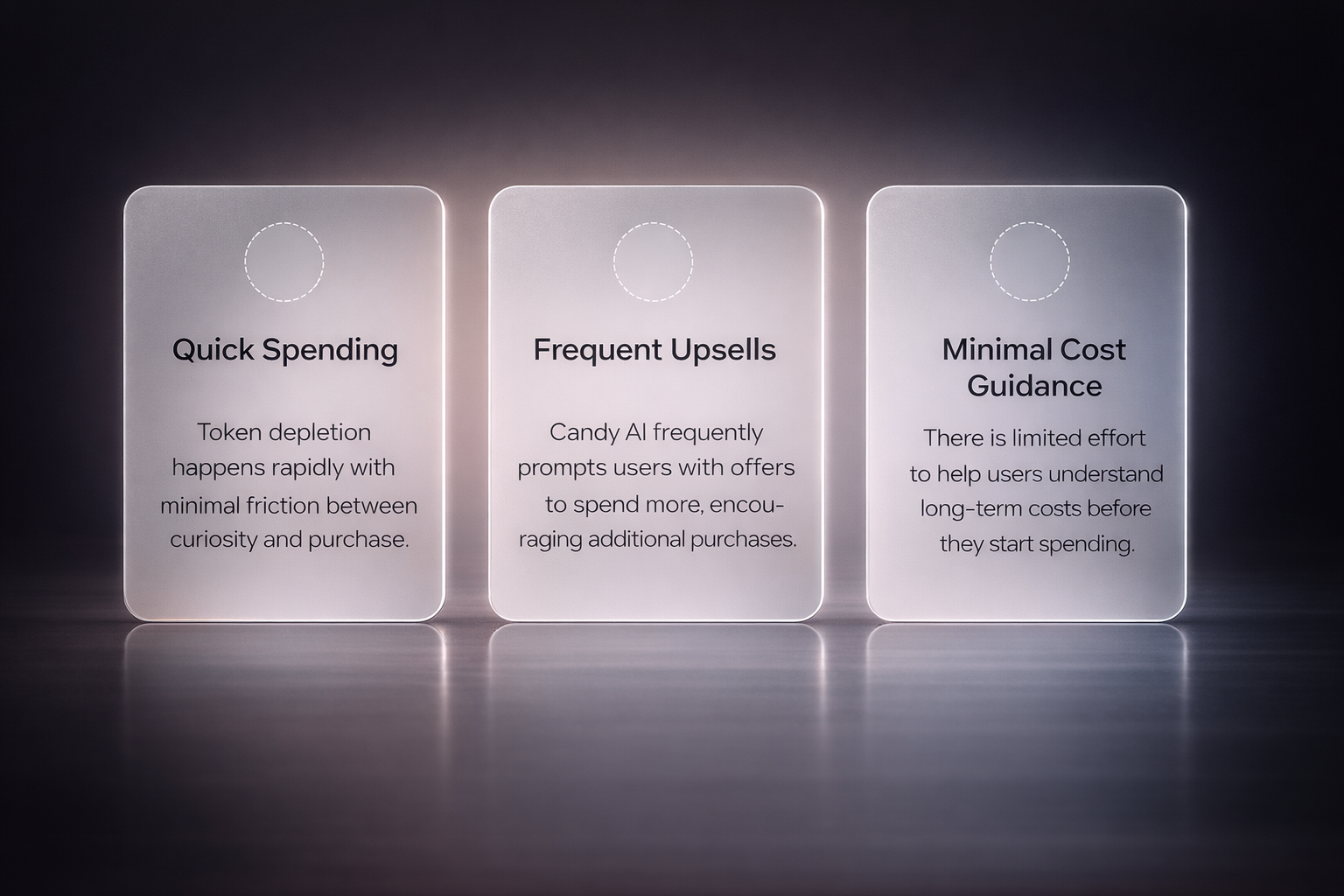
Candy AI does not do much to slow users down or help them understand long-term costs before spending begins. Token depletion is fast. Upsell prompts are frequent. There is little friction between curiosity and purchase.
That design choice favors revenue over comprehension.
Whether you see that as acceptable depends on how comfortable you are navigating monetized systems that assume a learning curve.
Emotional Legitimacy Versus Emotional Risk
One of the most uncomfortable parts of evaluating Candy AI is acknowledging that the emotional side works.
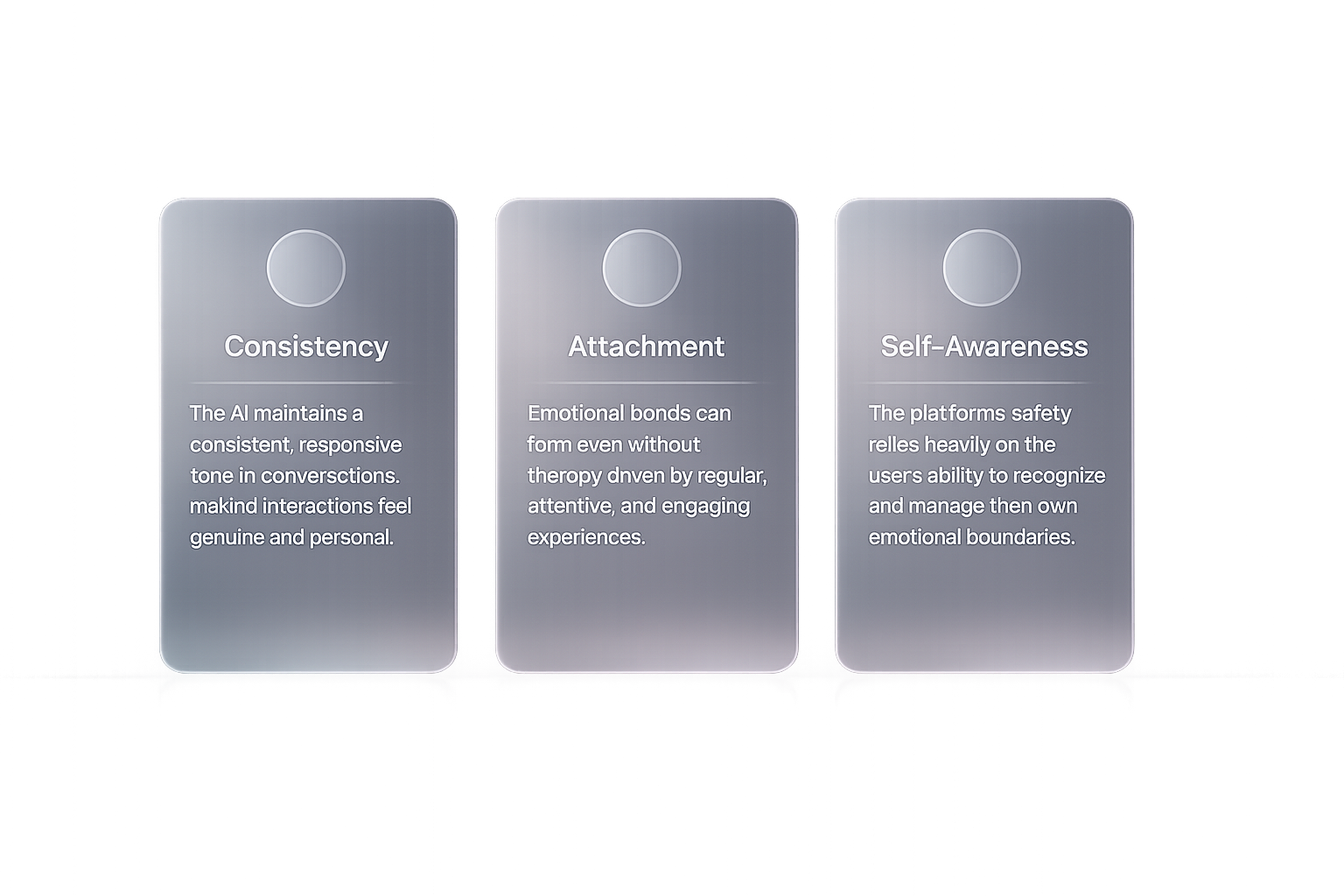
The AI does not feel random. It does not contradict itself constantly. It does not reset tone without reason. Over time, conversations feel more personal.
That is both the product’s strength and its risk.
Candy AI explicitly states that it is not therapy. But emotional attachment does not require therapeutic framing to develop. It requires consistency, attention, and perceived responsiveness. For emotionally stable users who treat the experience as entertainment, this is manageable. For users seeking validation or escape, the boundaries can blur.
This does not make the platform illegitimate. But it does mean legitimacy depends partly on user self-awareness, not just platform design. That is an uncomfortable truth many reviews avoid.
Privacy: Legit, But Not Reassuring
Candy AI’s privacy posture is best described as standard, not strong.
Chats are stored. Data is collected. Encryption details are vague. Retention timelines are unclear. None of this is unusual in consumer AI products, but it does matter given the nature of the conversations.
Payment processing appears legitimate and discreet. Bank statements do not expose platform details. That part is handled competently.
The risk lies less in breaches and more in long-term data ownership.
If you treat Candy AI conversations as private journaling or emotional confession, you are trusting a system that does not offer granular control over how that data is stored or used internally.
That is not a scam. But it is not privacy-forward either.
Is Candy AI Safe to Pay For?
From a payment perspective, Candy AI functions like a normal subscription service with in-app purchases layered on top.
Charges process reliably. Subscriptions can be canceled. Access remains until the billing period ends. Account deletion is possible.
The biggest payment complaints are not about unauthorized charges. They are about spending more than expected.
That distinction matters.
A scam takes money without delivering. Candy AI delivers what it sells. The issue is that what it sells is easy to underestimate.
If you enter with a fixed budget and discipline, the platform behaves predictably. If you explore without guardrails, spending escalates quickly.

R34.app as an Alternative for Pure Visual Browsing
If what you really want is visual content without conversation, tokens, or emotional framing, we built R34.app for that exact reason.
The platform is not designed to simulate relationships or pace an experience. Instead, it focuses on fast access to hentai videos, GIFs, and images pulled from established Booru sources. Users search by tags, browse trending or top posts, and scroll. That is the whole idea.
For users comparing this to AI companion platforms, the difference is straightforward:
- No chat, memory, or simulated intimacy
- No token systems or usage-based spending
- No accounts required just to browse
- Direct access to visual content through tags and filters
If you want conversation, progression, and emotional tone, Candy AI is built for that. If you want immediate, no-friction access to visuals without overhead, R34.app exists for exactly that use case.
Who Candy AI Is Legitimate For
Candy AI makes sense for users who:
- Understand token-based monetization and plan usage
- Prefer slow, consistent conversation over instant escalation
- Value image realism more than volume
- Treat the experience as entertainment, not emotional support
- Are comfortable with standard consumer data practices
For these users, Candy AI behaves predictably and delivers what it promises.
So, Is Candy AI Legit?
Yes, Candy AI is legit in the practical sense.
It is a real platform. It delivers its core features. It processes payments correctly. It allows cancellation. It does not disappear after charging your card.
But legitimacy does not automatically mean suitability.
Candy AI operates on a model that rewards patience, budgeting, and emotional distance. When those conditions are met, the experience feels controlled and even thoughtful. When they are not, it feels expensive and vaguely manipulative, even if no rules are broken.
The platform is not lying to users. But it does rely on them learning through experience rather than guidance.
If you go in informed, Candy AI is a legitimate product. If you go in curious and unprepared, it is easy to feel misled.
That difference is where most of the debate really lives.
Frequently Asked Questions
Is Candy AI legit?
Yes, Candy AI is a legitimate platform. It delivers the features it advertises, processes payments correctly, and allows users to cancel or delete accounts. Most complaints are about pricing mechanics and expectations, not about fraud.
Is Candy AI a scam?
No, Candy AI is not a scam. The platform works as described, but some users feel misled because subscriptions do not cover all features and token costs add up quickly if you are not careful.
Why do people say Candy AI is expensive?
Candy AI uses a token-based system on top of a subscription. While text chat is unlimited on paid plans, images, videos, voice calls, and private content consume tokens that run out faster than many users expect.
Is Candy AI safe to use?
Candy AI appears safe in a technical sense. Payments are processed securely and the service functions normally. However, conversations are stored and encryption details are not clearly explained, so users should avoid sharing sensitive personal information.
Does Candy AI store your conversations?
Yes, Candy AI stores chat data on its servers. This is common for AI platforms, but users should be aware that conversations are not treated as private or ephemeral.