
Quick Summary: Research indicates that women do consume hentai, though preferences vary widely. Studies show approximately 29% of surveyed participants consumed hentai in the past year, with female viewership demographics varying significantly by region. While anime and manga content often skews male in English-speaking markets, some markets like Vietnam, Russia, and France actually see female majorities among anime viewers.
The question of whether girls like hentai isn’t answered with a simple yes or no. Research reveals nuanced patterns in consumption, preferences, and demographic trends that challenge common assumptions about who watches animated adult content.
Hentai — a Japanese term meaning “perverse” sexual desire — represents pornography based on anime-style animation. While discussions often assume a predominantly male audience, actual data tells a more complex story.
What Research Shows About Female Hentai Consumption
According to research published in the journal Sexologies, people who consume hentai differ on several characteristics from those who consume other pornography types. The study surveyed 208 participants with an average age of 20.90 years.
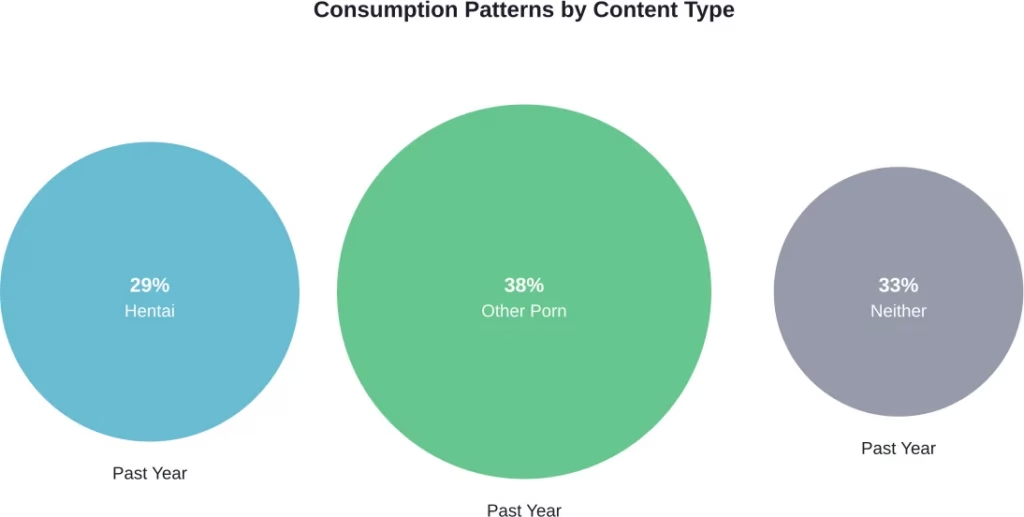
The findings showed approximately 29% had consumed hentai in the past year, while 38% had consumed non-hentai pornography. Importantly, this research didn’t find that hentai consumers differed from others regarding their attraction towards humans or desire for human relationships — debunking common misconceptions.
But here’s where it gets interesting.
The demographic breakdown wasn’t provided in granular gender detail in that particular study, but broader anime consumption patterns reveal significant insights about female engagement with anime-related content.
Use One Hub to Browse Adult Media

Instead of relying on one source, R34.app brings together different streams of visual content in one place. Images, GIFs, and videos are grouped through tags and featured categories, which makes the platform useful for browsing fandom media with a more direct search flow.
Looking for a Centralized Fandom Media Browser?
R34.app can help with:
- unrestricted access to visual NSFW content
- finding images, GIFs, and videos faster
- moving between multiple source websites from one interface
👉 Visit R34.app to explore its tag-based browsing system
Regional Differences in Female Anime Viewership
Data from Project Anime’s international survey shows that anime viewership demographics vary dramatically by region. While anime viewers internationally skew slightly male, this pattern becomes far more pronounced in English-speaking markets.
The United States has the smallest fraction of anime viewership that identifies as female among all 14 markets surveyed. The UK and Australia show similar patterns, as does Brazil.
That said, several markets tell a completely different story. Vietnam, Russia, and France actually see female majorities among anime viewers. Korea and China show near-equal gender distribution.
These geographic variations suggest cultural factors play a substantial role in who engages with anime and related content, including hentai.
Understanding Female Preferences and Consumption Patterns
Community discussions on platforms like Reddit and MyAnimeList reveal diverse perspectives from women who do consume hentai. Preferences vary widely, with some women preferring specific genres or artistic styles over others.
The content itself matters significantly. Academic research examining anime content has found varying levels of sexist stereotyping across different series and genres. Studies have analyzed the extent to which popular anime contained sexist content and tested whether anime consumption correlated with viewers’ attitudes.
Real talk: many women report seeking hentai that features more balanced power dynamics, better art quality, or storylines that prioritize female pleasure. These preferences differ markedly from stereotypical male-oriented content.
The Broader Anime and Manga Context
The Japanese animation industry reached a market value of approximately 3.84 trillion yen (approximately $25 billion USD) in 2024, continuing its growth trajectory into 2026.
This massive growth includes adult-themed content. Analysis of hentai games and market trends indicates that while popularity continues rising, adult-themed titles remain a niche segment rather than dominating mainstream markets.
Titles on platforms like Steam demonstrate varying traction levels, while free-to-play entries show that low-cost access drives engagement. However, behavioral patterns suggest fully adult games remain unlikely to surpass mainstream entertainment where mass-market revenue matters.
| Market Factor | Male-Skewed Markets | Female-Majority Markets |
|---|---|---|
| Primary Examples | US, UK, Australia, Brazil | Vietnam, Russia, France |
| Content Accessibility | Wide streaming availability | Varied distribution channels |
| Cultural Attitudes | Anime seen as niche/male | Broader cultural acceptance |
| Community Presence | Male-dominated forums | More balanced communities |
What Parents and Educators Should Know
According to research cited in Psychology Today, anime and hentai pornography represents a growing trend among young adults. The accessibility of this content means parents need awareness about what children might encounter.
The distinction between mainstream anime and hentai matters. While anime encompasses all Japanese animation — from family-friendly content to adult material — hentai specifically refers to sexually explicit animated content.
Look, the anonymity of online spaces means consumption patterns don’t always reflect public discussions. Many women consume this content privately without participating in public forums, skewing perception of audience demographics.
Psychological and Social Considerations
Research examining psychological aspects found that hentai consumers don’t necessarily differ from other pornography consumers regarding human attraction or relationship desires. This challenges assumptions that animated pornography consumption indicates social dysfunction or inability to form human connections.
Academic studies on watching anime and doing gender have explored how content consumption relates to gender expression and identity. The relationship between consumption patterns and attitudes remains an active research area.
Addressing Common Misconceptions
Several myths persist about female engagement with hentai and anime content:
- Myth: Women don’t watch hentai at all.
- Reality: Women consume this content at varying rates depending on region, age, and cultural context.
- Myth: Female hentai viewers have the same preferences as male viewers.
- Reality: Community discussions reveal distinct preference patterns, though individual variation remains high.
- Myth: Hentai consumption indicates problems with human relationships.
- Reality: Research found no significant differences in human attraction or relationship desire between hentai consumers and others.
Frequently Asked Questions
Do women actually watch hentai?
Yes, research confirms women consume hentai, though rates vary by region and demographic factors. Studies show approximately 29% of surveyed participants consumed hentai in the past year, and while specific gender breakdowns weren’t always provided, community discussions and regional anime viewership data confirm female engagement.
What types of hentai do women prefer?
Preferences vary widely among individual women. Community discussions suggest some prefer content with balanced power dynamics, quality artwork, and storylines that prioritize female pleasure. Genre preferences range from romance-focused content to specific artistic styles, with no single type dominating female viewership.
Why is female hentai viewership higher in some countries?
Cultural attitudes toward anime and adult content vary significantly by region. Countries like Vietnam, Russia, and France show female majorities in anime viewership, while English-speaking markets skew more male. These differences likely reflect cultural acceptance levels, content accessibility, and community dynamics.
Is hentai consumption harmful?
Research published in Sexologies found that hentai consumers didn’t differ from other pornography consumers regarding human attraction or relationship desires. However, concerns exist about sexist content in some anime and manga. Academic studies have examined associations between content consumption and viewer attitudes, with results varying by content type and individual factors.
How common is hentai consumption among young adults?
According to studies, approximately 29% of surveyed participants aged around 21 years had consumed hentai in the past year. Psychology Today notes that anime and hentai pornography represents a growing trend among young adults, though exact prevalence rates vary by demographic and geographic factors.
What’s the difference between anime and hentai?
Anime refers to all Japanese animation, ranging from family-friendly content to adult material. Hentai specifically denotes sexually explicit animated pornography. While all hentai uses anime-style art, the vast majority of anime contains no sexual content.
Where can someone find research about hentai demographics?
Academic research appears in journals like Sexologies, with additional data from organizations studying anime consumption patterns globally. Platforms like Academia.edu host studies examining anime content, gender dynamics, and consumption patterns across different markets.
Conclusion
So, do girls like hentai? The research shows yes — some do, with significant variation in rates, preferences, and consumption patterns across different regions and demographics.
Female engagement with hentai and anime content challenges simplistic assumptions about audience composition. From markets with female viewing majorities to diverse preference patterns revealed in community discussions, the landscape proves far more nuanced than stereotypes suggest.
Understanding these patterns requires looking beyond assumptions to actual data, recognizing cultural differences, and acknowledging the wide variation in individual preferences. As the anime industry continues growing globally, demographic patterns will likely continue evolving across different markets and age groups.