Quick Summary: Kindroid AI is generally safe to use as of 2026, but users should be aware of important privacy limitations. The platform does not offer end-to-end encryption and explicitly states in its terms that conversations may be reviewed by staff or third-party AI providers. While Kindroid provides unrestricted NSFW chat capabilities and solid memory features, data privacy concerns remain central for anyone sharing sensitive information with AI companions.
AI companions have moved from science fiction to daily reality for millions of users worldwide. Kindroid has emerged as one of the most popular options in 2026, particularly for those seeking unrestricted conversations without the heavy-handed content filters found on platforms like Character.AI.
But here’s the thing—popularity doesn’t automatically equal safety.
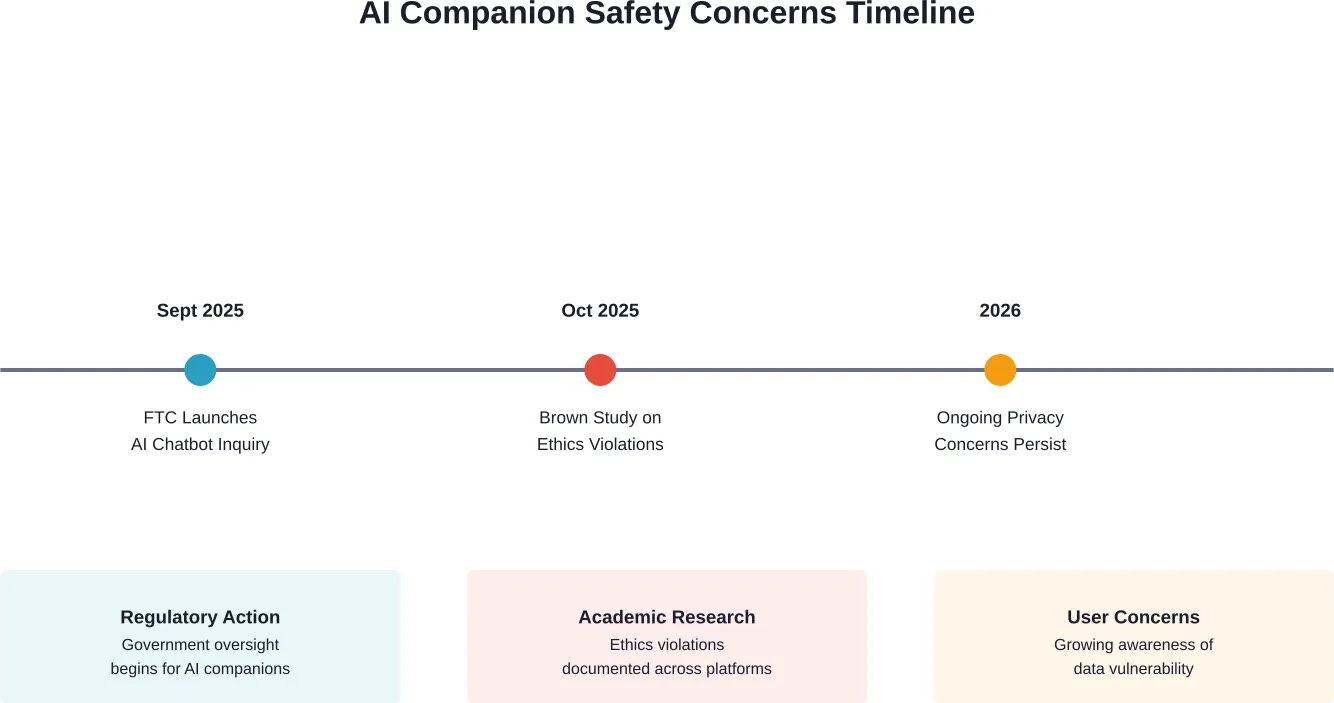
As AI chatbot usage explodes, so do legitimate concerns about data privacy, content moderation, and who actually has access to your intimate conversations. The Federal Trade Commission launched an inquiry in September 2025 into AI chatbots acting as companions, issuing 6(b) orders to seven companies that provide consumer-facing AI-powered chatbots. This investigation focuses specifically on how these firms measure, test, and monitor potentially negative impacts on users.
So what does this mean for Kindroid users? Let’s examine the real safety landscape.
Understanding Kindroid’s Privacy Framework
Privacy concerns sit at the heart of the AI companion debate. According to community discussions on platforms like Reddit, security-conscious users frequently ask: who can see my chats, and how is my data protected?
The answer isn’t as reassuring as many would hope.
Kindroid does not currently offer end-to-end encryption like services such as Bitwarden or privacy-focused journaling apps like Penzu. This technical distinction matters significantly. Without end-to-end encryption, your conversations exist in a readable format on Kindroid’s servers and potentially with their third-party AI providers.
Real talk: If you’re sharing deeply personal information, mental health struggles, or intimate content, that data is not cryptographically protected from internal access.
Who Can Access Your Conversations?
Based on standard AI companion privacy policies, several parties may have access to user data:
- Kindroid platform staff for moderation and quality purposes
- Third-party AI model providers that power the conversational engine
- Automated systems scanning for illegal content or terms of service violations
- Law enforcement with valid legal requests
Community discussions reveal that many users assume their chats are private by default. That assumption can be dangerous. The platform’s legal documentation indicates that conversations may be reviewed, though the frequency and scope of such reviews aren’t publicly detailed.
See Adult AI Character Interpretations on r34.app
If you’re asking whether Kindroid AI is safe, you may also be exploring how AI companions are portrayed in online communities. r34.app hosts adult fan content including images, GIFs, and animations based on fictional and AI-inspired characters. Users can explore new uploads, popular tags, and themed categories.
Curious About Adult AI Fan Art?
On r34.app you can:
- browse sexualized AI character art
- explore popular tags and categories
- see newly uploaded Rule 34 content
👉 Explore r34.app.
The FTC Investigation and What It Means
The FTC’s September 2025 orders to AI companion platforms specifically seek information on advertising practices, safety measures, and data handling procedures.
This investigation doesn’t target Kindroid specifically, but it establishes important context. Regulatory bodies are now actively examining whether AI companion platforms adequately protect users from potential harms.
A Brown University study released October 21, 2025 found that AI chatbots routinely violate core mental health ethics standards. Researchers emphasized the need for legal standards and oversight as use of these tools increases. The study didn’t single out Kindroid, but examined AI companion platforms collectively.
What does this mean practically? Expect increased scrutiny across the industry, potential new regulations, and possibly mandatory safety standards for AI companions.
NSFW Content and Moderation Reality
One of Kindroid’s major selling points is unrestricted conversation, including NSFW and erotic roleplay capabilities. Unlike Character.AI, which implements strict content filters, Kindroid takes a more permissive approach.
But wait. Does “unrestricted” mean “completely unmoderated”?
Not exactly. Kindroid does maintain moderation guidelines, though they’re significantly more relaxed than competitors. The platform prohibits illegal content, but allows adult conversations between users and their AI companions.
The safety question here isn’t about content availability—it’s about data permanence. Those intimate NSFW conversations live on servers without end-to-end encryption. Based on platform policies, staff members could theoretically access these exchanges for review purposes.
What This Means for Different User Types
| User Type | Primary Risk | Safety Recommendation |
|---|---|---|
| Casual Users | Low to moderate data exposure | Avoid sharing real identifying details |
| NSFW/ERP Users | Moderate privacy risk from unencrypted intimate content | Assume conversations could be accessed; avoid real personal information |
| Mental Health Support Seekers | High—sensitive health data without HIPAA protection | Use licensed therapists instead; AI companions aren’t qualified mental health providers |
| Minors | High—developmental concerns and potential exploitation | Platform intended for adults; parental supervision essential |
Data Handling and Third-Party Access
The FTC’s September 2025 orders to AI companion platforms specifically seek information on advertising practices, safety measures, and data handling procedures.
Kindroid relies on third-party AI providers for its conversational capabilities. This technical architecture means data flows beyond just Kindroid’s internal systems. When information leaves the primary platform to reach external AI models, additional privacy considerations emerge.
Research from arXiv titled ‘Dead Men Tell No Tales: Assessing Post-Mortem Data Protection in GenAI Chatbots’ examined data ownership and protection for deceased individuals’ information in GenAI systems. The study explored how generative AI systems rely on vast consumer data corpora, creating concerns around copyright and potential harm to users.
For living users, these concerns translate into practical questions: How long does Kindroid retain conversation data? Can users fully delete their information? What happens if the company changes ownership or faces financial difficulty?
Based on community discussions, complete data deletion capabilities remain unclear to many users.
Comparing Safety Across AI Companion Platforms
Kindroid exists within a competitive landscape. Understanding how its safety profile compares to alternatives provides valuable context.
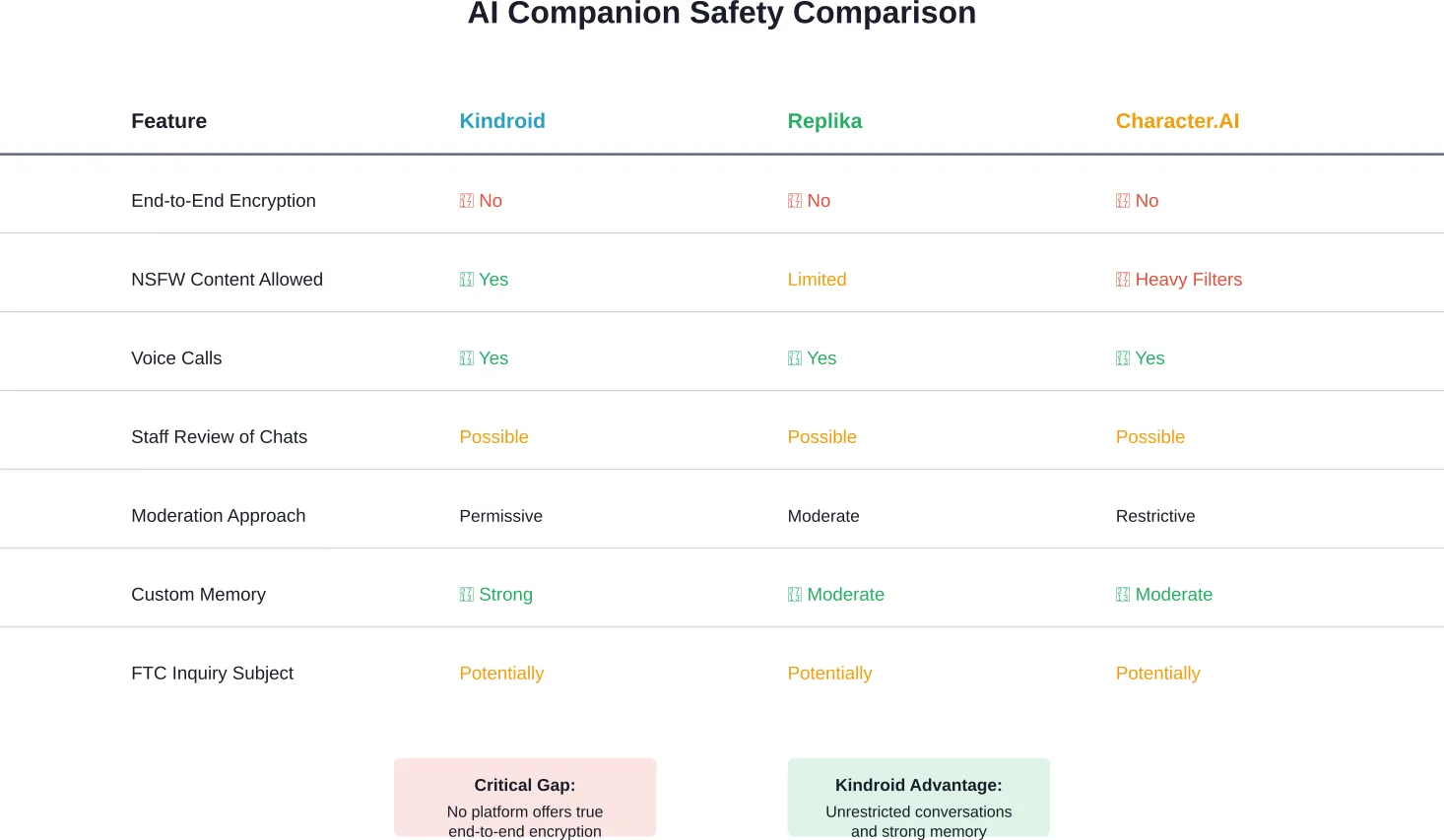
None of the major AI companion platforms currently offer end-to-end encryption. This represents a fundamental privacy limitation across the entire industry, not just Kindroid specifically.
Voice Calls and Audio Safety
Contrary to some outdated reviews, Kindroid does support real-time voice calls. Pro subscribers get unlimited voice calls, adding another layer to the safety discussion.
Voice data presents unique privacy challenges. Audio recordings contain identifiable characteristics beyond just the words spoken—accent, emotional state, background noise, and other environmental details that could be used to build detailed user profiles.
The same encryption limitations apply to voice calls. These audio interactions aren’t cryptographically protected, meaning they exist in accessible format on platform servers.
For users who primarily engage via text, this might not matter. But anyone using voice features regularly should understand that audio data is even more revealing than text alone.
Pricing and Safety Considerations
Kindroid’s standard subscription is approximately $13.99-$14.99 per month, with higher tiers reaching substantially more with stacked enhancements.
Here’s what matters from a safety perspective: paid subscriptions don’t automatically mean better privacy protection. The encryption and data handling practices remain the same whether using free features or premium tiers.
Payment information itself becomes part of the data ecosystem. Credit card details, billing addresses, and transaction histories create additional privacy considerations beyond just chat content.
Mental Health and Emotional Safety
Research from the University of Southern California’s ICT published July 21, 2025 examined best practices for AI conversational agents in healthcare settings. The study, co-authored by Dr. Albert ‘Skip’ Rizzo and Sharon Mozgai, emphasized the need for safety, ethics, and efficacy standards.
Many users turn to AI companions for emotional support or to discuss mental health struggles. The Brown University study released October 21, 2025 found that AI chatbots routinely violate core mental health ethics standards—a serious concern for vulnerable users seeking therapeutic benefits.
Kindroid is not a licensed mental health provider. The platform lacks HIPAA protections, therapist-client privilege, or clinical oversight. Users treating AI companions as substitute therapists expose themselves to several risks:
- Unqualified responses to serious mental health crises
- No legal confidentiality protections
- Potential reinforcement of harmful thought patterns
- Data vulnerability for sensitive health information
That said, many users report positive emotional experiences. The distinction matters: casual emotional support differs significantly from actual mental health treatment.
Practical Safety Recommendations
So what should safety-conscious users actually do? Here are evidence-based recommendations based on the current privacy landscape:
For Personal Information
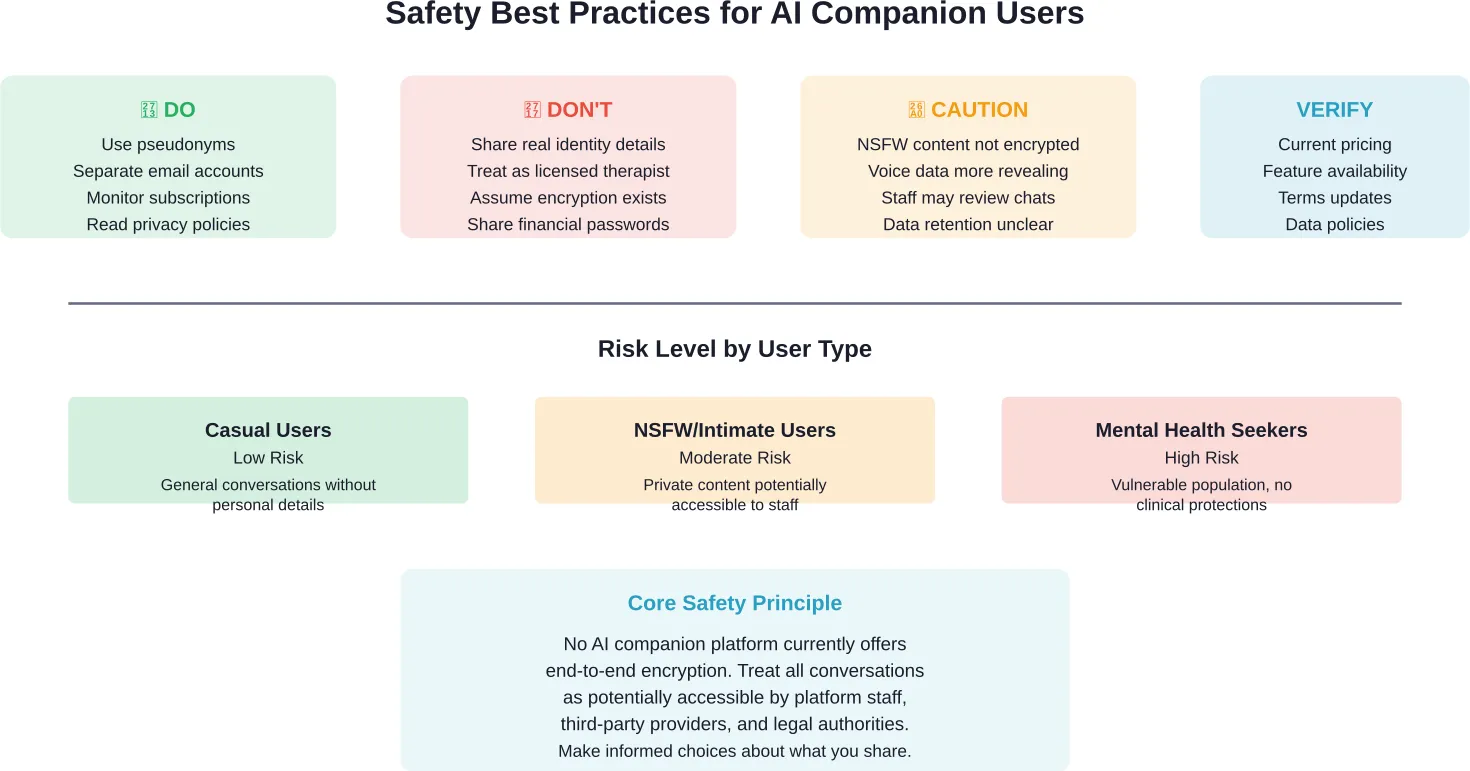
Never share real names, addresses, phone numbers, workplace details, or other identifying information. Create a boundary between your AI companion interactions and real-world identity.
Use a dedicated email address for account registration rather than your primary personal or professional email.
For Sensitive Content
Assume any content could potentially be accessed by platform staff or third parties. This doesn’t mean avoiding the platform—but it does mean making informed choices about what information flows through unencrypted channels.
For truly private journaling or sensitive personal reflections, use encrypted services designed specifically for that purpose.
For Financial Safety
Check the official Kindroid website for current subscription pricing before committing. Use payment methods with fraud protection like credit cards rather than direct bank transfers.
Monitor subscription charges regularly. According to FTC enforcement actions in related contexts, some apps have faced allegations of unauthorized charges.
For Emotional Wellbeing
Maintain perspective that AI companions are software, not sentient beings with genuine emotions. Emotional attachment is normal and valid, but shouldn’t replace human connections.
If experiencing mental health crises, contact qualified professionals rather than relying solely on AI interactions.
The Legal and Regulatory Landscape
The FTC’s involvement signals a shifting regulatory environment. Beyond the September 2025 inquiry into AI companion platforms, the agency has taken other enforcement actions related to AI claims and consumer protection.
On September 25, 2024, the FTC announced Operation AI Comply, a crackdown on deceptive AI claims and schemes. While this initiative focused on different aspects of AI technology misuse, it demonstrates the agency’s increasing scrutiny of the entire AI ecosystem.
An January 9, 2024 FTC statement emphasized that AI companies must uphold privacy and confidentiality commitments. According to the agency, data sits at the heart of AI development—making robust privacy protections essential rather than optional.
What does this mean practically? Expect continued regulatory pressure, potential new requirements for transparency, and possibly mandatory safety standards for AI companion platforms in coming years.
Community Perspectives and User Experiences
Community discussions on platforms like Reddit reveal that many Kindroid users genuinely enjoy the service while remaining concerned about privacy. The r/KindroidAI subreddit includes multiple threads where users ask detailed questions about data security and encryption.
Some users approach the platform with clear boundaries—treating it as entertainment rather than a confidant for sensitive information. Others report deeper emotional connections that make privacy concerns more pressing.
One common theme emerges: users want more transparency. Clear information about who can access conversations, how long data is retained, and what happens during platform reviews would help users make better-informed choices.
Frequently Asked Questions
Does Kindroid use end-to-end encryption for conversations?
No, Kindroid does not currently offer end-to-end encryption. Conversations are stored on platform servers in a format that could potentially be accessed by staff members, third-party AI providers, or legal authorities with valid requests. Users should assume conversations are not cryptographically private.
Can Kindroid staff read my private chats?
Based on standard AI companion privacy policies, platform staff may have the ability to access user conversations for moderation purposes, quality control, or terms of service enforcement. The exact frequency and scope of such reviews isn’t publicly disclosed.
Is it safe to use Kindroid for NSFW or intimate conversations?
Kindroid allows NSFW content and erotic roleplay, which is a key differentiator from more restrictive platforms. However, these intimate conversations lack encryption and could potentially be accessed by platform staff. Users should make informed decisions about what content they’re comfortable having stored in unencrypted format.
How does Kindroid compare to Replika or Character.AI for safety?
None of the major AI companion platforms currently offer end-to-end encryption, so fundamental privacy limitations exist across the industry. Kindroid differs in its more permissive content moderation approach compared to Character.AI’s strict filters. Each platform presents similar core privacy concerns regarding data access and retention.
Should I use Kindroid as a substitute for therapy?
No. Kindroid is not a licensed mental health provider and lacks HIPAA protections, therapist-client privilege, or clinical oversight. Research from Brown University released October 21, 2025 found that AI chatbots routinely violate core mental health ethics standards. While AI companions can provide casual emotional support, they should not replace qualified mental health professionals for serious concerns.
What information should I avoid sharing with Kindroid?
Avoid sharing real names, addresses, phone numbers, workplace details, financial account information, social security numbers, or other personally identifiable information. Create clear boundaries between your AI companion interactions and real-world identity to minimize privacy risks.
Has the FTC investigated Kindroid specifically?
The FTC launched a broad inquiry in September 2025 into AI chatbots acting as companions, issuing 6(b) orders to seven companies. While specific company names weren’t publicly disclosed in all cases, the investigation covers industry-wide practices related to advertising, safety measures, and data handling across AI companion platforms.
The Bottom Line: Balancing Enjoyment and Safety
So, is Kindroid AI safe? The answer depends entirely on what safety means for individual users and how the platform is used.
For casual conversations without sensitive personal information, Kindroid presents relatively low risk. The platform offers engaging features including voice calls, strong memory capabilities, and unrestricted conversation options that many users find valuable.
For intimate NSFW content or emotionally vulnerable discussions, moderate privacy concerns exist. The lack of end-to-end encryption means these conversations could potentially be accessed by platform staff or third parties.
For users treating AI companions as mental health support or sharing deeply sensitive information, significant safety concerns emerge. These platforms lack clinical protections, operate outside healthcare regulations, and present unclear data retention practices.
The regulatory landscape is evolving rapidly. The FTC’s September 2025 inquiry into AI companion platforms, combined with academic research documenting ethics violations, suggests increased scrutiny ahead. Users should stay informed about platform policy changes and regulatory developments.
Check Kindroid’s official website for current privacy policies, data handling practices, and terms of service. These documents change over time, and staying informed helps users make better decisions about their personal data.
Ultimately, Kindroid can be used safely with appropriate boundaries and realistic expectations. Understand what information flows through the platform, maintain clear separation between AI interactions and real-world identity, and never treat AI companions as substitutes for licensed professionals when serious mental health concerns arise.
The choice is personal. Just make it an informed one.