
Quick Summary: Yes, hentai is considered a form of pornography—specifically, Japanese-style animated or drawn sexually explicit content. While it doesn’t feature real people, it serves the same purpose as traditional pornography and falls under the legal definition of obscene material when depicting sexual content. The distinction lies in its medium (animation/illustration) rather than its intent or classification.
The question of whether hentai qualifies as pornography comes up constantly in online discussions, legal contexts, and personal conversations about media consumption. The short answer? Absolutely—hentai is pornography.
But the longer answer involves understanding what hentai actually is, how it differs from traditional porn, and why those differences matter legally and culturally. Let’s break it down.
What Exactly Is Hentai?
Hentai is a Japanese term that literally translates to “perversion” or “abnormality.” In practice, it refers to a style of Japanese pornographic anime and manga. According to Wikipedia’s comprehensive coverage of the topic, hentai works exist across multiple media formats, including artwork, video games (commonly known as eroge), and traditional animation.
The term ‘hentai’ has evolved in meaning over time, with historical usage documented in academic sources. The modern usage as animated pornography emerged later.
Here’s the thing though—hentai isn’t just Japanese cartoon art that happens to include nudity. It’s explicitly created as sexually stimulating material, which places it squarely in the pornography category.
The Key Characteristics of Hentai
Hentai typically features:
- Animated or illustrated characters in sexually explicit situations
- Origins in Japanese anime and manga art styles
- Fantasy scenarios that would be impossible or illegal to film with real actors
- A wide range of subgenres and themes, from relatively conventional to extreme
- Distribution primarily through digital platforms and specialized publications
According to Fight the New Drug, many people who struggle with hentai consumption report it being just as addictive as pornography featuring real people, despite the animated format.
Search Hentai Content Faster With R34.app

R34.app works as a content browser for people who prefer searching by tag instead of browsing manually. Users can look up specific characters, franchises, or categories and then sort through related posts using tag pages and featured sections.
Need a Simpler Way to Browse by Tag?
R34.app can help with:
- finding posts through fandom and character tags
- unrestricted access to visual NSFW content
- using one interface for several linked sources
👉 Visit R34.app to explore its tag-based browsing system
Hentai vs. Traditional Pornography: What’s the Difference?
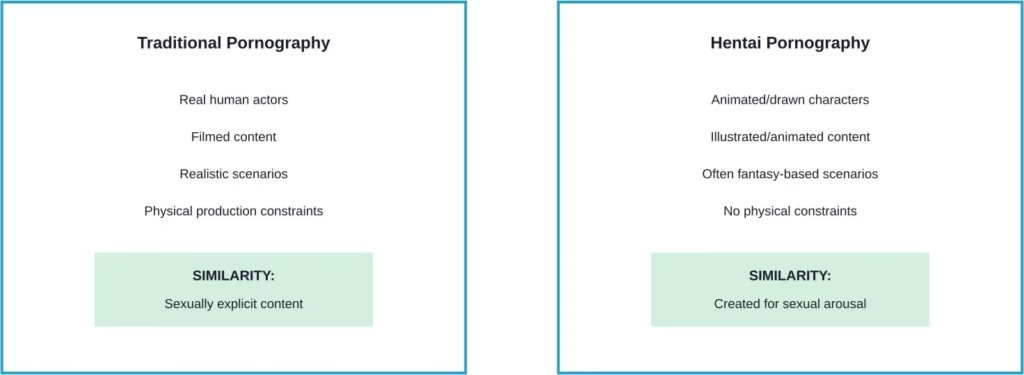
The primary distinction between hentai and conventional pornography is the medium, not the purpose. Traditional porn features real human actors performing sexual acts. Hentai uses drawn or animated characters.
But does that difference matter when it comes to classification?
Not really. Both serve the same function: providing sexually explicit material for arousal and gratification. The fact that hentai doesn’t involve real performers doesn’t change its fundamental nature as pornographic content.
Why Some People View Hentai Differently
There’s a common misconception that because hentai doesn’t feature real people, it’s somehow “less” pornographic or morally distinct. Some consumers attempt to justify hentai consumption by arguing that no real people are harmed.
This reasoning has several flaws. First, the definition of pornography doesn’t require real performers—it’s about the sexually explicit nature of the content itself. Second, the psychological and behavioral effects appear similar regardless of format.
The Legal Status of Hentai
Legally speaking, hentai falls under obscenity laws in most jurisdictions. According to Cornell Law School’s documentation of 18 U.S. Code § 1466A, visual depictions of any kind—including drawings, cartoons, sculptures, or paintings—can be prosecuted as obscene material.
The law specifically addresses visual representations that depict minors engaging in sexually explicit conduct and are considered obscene. This means certain types of hentai content are explicitly illegal under federal law, regardless of the fact that no real children are involved.
Obscenity Standards
The U.S. Department of Justice’s guidance on obscenity makes clear that transmitting obscenity and child pornography, whether via the Internet or other means, is illegal under federal law for both adults and juveniles. This applies to animated and illustrated material, not just photographs and videos of real people.
The Supreme Court case Ashcroft v. Free Speech Coalition addressed virtual child pornography, but the protections granted in that case were narrow. The court ruled that some forms of virtual pornography could be protected speech, but this doesn’t provide blanket protection for all hentai content.
| Legal Category | Application to Hentai | Key Statute |
|---|---|---|
| Obscene Material | Yes, if meets obscenity test | 18 U.S.C. § 1460-1470 |
| Child Pornography | Yes, if depicts minors sexually | 18 U.S.C. § 1466A |
| Protected Speech | Limited protection for some content | First Amendment (with restrictions) |
| Interstate Distribution | Federal jurisdiction applies | 18 U.S.C. § 1462 |
Real talk: the legal system doesn’t care that hentai is drawn rather than filmed when determining whether it’s pornographic or obscene. The content matters, not the production method.
Cultural Origins and Development
Understanding hentai requires looking at its cultural context. The development of hentai as a distinct pornographic form emerged from Japanese manga and anime culture. Historical restrictions on showing pubic hair and genitalia in Japanese media led to creative censorship methods that became characteristic of the genre.
According to Wikipedia’s historical overview, part of Japan’s obscenity ban was lifted when director Nagisa Oshima prevailed over obscenity charges for his film “In the Realm of the Senses.” However, the lifting of this ban didn’t apply to anime and manga, which weren’t deemed artistic exceptions.
This created a unique situation where hentai developed its own visual language and censorship conventions, including pixelation and obscuring techniques common in Japanese hentai.
Why Hentai Has Become So Popular
Fight the New Drug notes that hentai represents a significant portion of pornography consumption, particularly among younger demographics. Research indicates that a significant percentage of teenagers have been exposed to pornography, often before any healthy conversations about sexuality.
Several factors drive hentai’s popularity:
- Accessibility: Widely available online with fewer payment barriers than premium porn sites
- Anonymity: Perceived as less “real” and therefore easier to justify consuming
- Fantasy fulfillment: Can depict scenarios impossible with real actors
- Gaming crossover: Strong connection to video game culture and eroge (erotic games)
- Artistic appeal: Some consumers appreciate the animation style beyond sexual content
But here’s where it gets interesting. The ESRB (Entertainment Software Rating Board) has specific content descriptors for sexual content in games. Games containing explicit sexual content receive “Adults Only” ratings, which includes hentai-style erotic games. This recognition by an official rating organization further confirms hentai’s classification as pornographic material.
Religious and Moral Perspectives
From a religious standpoint, Got Questions addresses hentai directly in their analysis of biblical perspectives. They note that the Bible doesn’t specifically mention hentai (obviously, given its modern origin), but it does address lust, sexual immorality, and the consumption of sexually explicit material.
The key biblical passages cited include Matthew 5:28, which states that looking at someone lustfully constitutes adultery in the heart. From this perspective, the animated nature of hentai doesn’t exempt it from being problematic—the intent and effect are what matter.
Got Questions explains that attempting to distinguish between hentai and “regular” pornography misses the point. Both involve deliberately viewing sexually explicit material for arousal, which conflicts with biblical teachings about sexual purity and the sanctity of sexuality within marriage.
Common Moral Arguments
The moral debate around hentai versus traditional pornography often centers on harm:
Arguments that hentai is “better”:
- No real people exploited in production
- No human trafficking concerns
- No performers subjected to potentially harmful conditions
Counterarguments:
- Normalizes and potentially escalates harmful sexual fantasies
- Can depict illegal acts (including child sexual abuse) without legal consequences in some jurisdictions
- May desensitize consumers to sexual violence
- Reinforces unrealistic and potentially harmful expectations about sex and bodies
Fight the New Drug points out that even though cartoons aren’t real bodies, hentai can encourage violence against women and girls by making sexual violence a form of entertainment. The lack of real victims in production doesn’t eliminate potential real-world harms.
Psychological and Behavioral Effects
Research on hentai specifically is limited, but studies on pornography consumption generally suggest similar patterns regardless of format. Users report addiction-like behaviors, escalation to more extreme content, and impacts on real-world relationships.
Evidence suggests that individuals struggling with pornography addiction may include hentai in their definition of relapse. The animated format doesn’t seem to reduce the compulsive aspects of consumption or the difficulty of quitting.
Now, this is where it gets interesting. Some consumers believe hentai is “safer” because it’s not “real,” but behavioral patterns suggest the brain responds similarly to sexually explicit animated content as it does to filmed pornography.
Classification Systems and Content Ratings
The ESRB rating system provides insight into how official organizations classify hentai-style content. According to their rating guide, content with explicit sexual material receives an “Adults Only” (AO) rating, which severely limits distribution channels.
The ESRB uses specific content descriptors including:
- “Nudity” for graphic or prolonged depictions
- “Sexual Content” for non-explicit depictions of sexual behavior
- “Sexual Themes” for references to sex or sexuality
- “Mature Humor” for vulgar references or crude humor
Hentai games typically fall into the highest restriction category, treated identically to pornographic games featuring real actors or models. This official classification reinforces that hentai is pornography from a content rating perspective.
| Content Type | ESRB Rating | Distribution Impact |
|---|---|---|
| Mild Sexual Themes | Teen (T) | Wide distribution |
| Sexual Content | Mature (M) | Limited to 17+ |
| Explicit Sexual Content (including hentai) | Adults Only (AO) | Severely restricted |
International Legal Variations
Legal treatment of hentai varies significantly across countries. In Japan, where it originated, hentai is legal but subject to censorship requirements that mandate obscuring of genitalia. This explains the pixelation and obscuring techniques common in Japanese hentai.
In countries like Australia, Canada, and parts of Europe, laws specifically address drawn or animated child pornography. Possession or distribution can carry the same penalties as photographic child pornography.
The United States takes a middle approach. According to 18 U.S. Code § 1466A from Cornell Law, obscene visual representations are illegal, but the obscenity test provides some First Amendment protections for material not involving actual minors.
However, multiple prosecutions have occurred for hentai possession, particularly when it depicts minors in sexual situations. These cases confirm that “it’s just a drawing” isn’t a viable legal defense in many jurisdictions.
The “No Victims” Argument Examined
One of the most common defenses of hentai is that its production doesn’t create victims like traditional pornography can. This argument has some merit when considering direct exploitation in production.
But the analysis can’t stop there. Legal systems and moral frameworks consider broader impacts:
Potential indirect harms:
- Normalizing illegal sexual acts through repeated exposure
- Creating demand that could influence real-world behavior
- Reinforcing harmful attitudes about consent and sexuality
- Contributing to compulsive sexual behavior patterns
The Department of Justice’s stance on obscenity doesn’t require direct victim identification. Material can be legally obscene based on its content and effect, regardless of production methods.
Hentai in Mainstream Culture
Hentai has increasingly entered mainstream awareness, though often as a punchline or cultural reference rather than serious discussion. Anime conventions often struggle with setting boundaries around hentai merchandise and content.
The connection between mainstream anime/manga culture and hentai creates complexity. Many popular anime series have unofficial hentai parodies or spin-offs. This proximity can normalize hentai consumption within anime fan communities.
The ESRB’s history shows increasing attention to sexual content in games over the past three decades. The ESRB was founded in 1994 by the Interactive Digital Software Association to provide age-based ratings for video games. Sexual content has remained a primary rating factor throughout their history.
So, Is Hentai Porn? The Definitive Answer
Yes. Unequivocally, hentai is pornography.
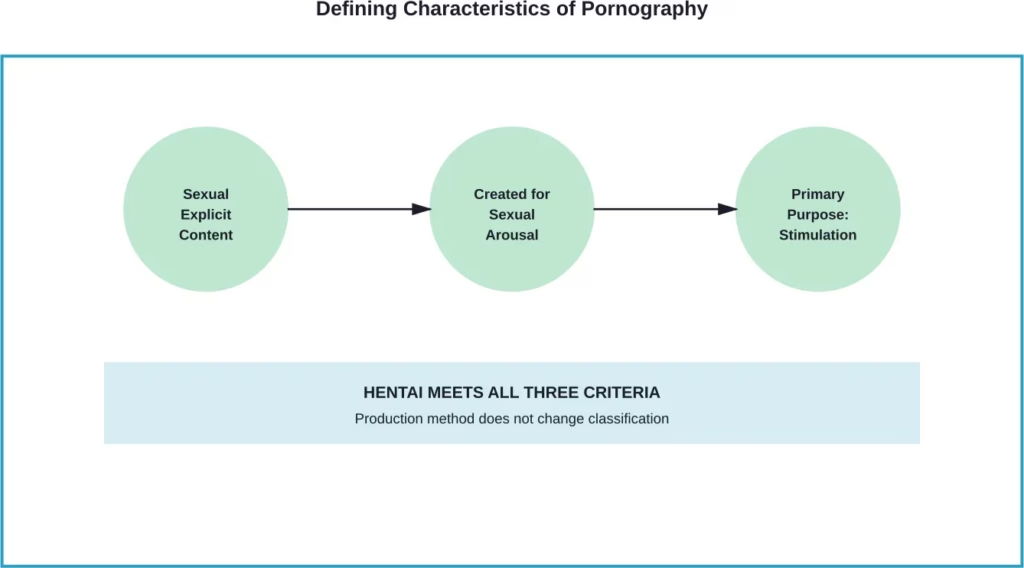
It meets every definitional criterion:
- Purpose: Created for sexual arousal and gratification
- Content: Contains sexually explicit material depicting sexual acts
- Intent: Consumed primarily for sexual stimulation
- Classification: Rated and regulated as pornographic material
- Legal treatment: Subject to obscenity laws and pornography regulations
The animated format doesn’t change its fundamental nature. Whether illustrated, animated, or filmed, pornography is defined by its sexually explicit content and purpose, not its production method.
Legal systems treat it as pornography. Content rating organizations classify it as pornographic. Consumers use it as pornography. That settles the question.
Frequently Asked Questions
Is watching hentai the same as watching regular porn?
Functionally, yes. Both involve consuming sexually explicit material for arousal. The animated format doesn’t change the fundamental nature of the content or its purpose. Legal systems, content rating organizations, and religious perspectives typically treat them identically.
Is hentai illegal in the United States?
It depends on the specific content. Hentai depicting minors in sexual situations violates 18 U.S. Code § 1466A and is federally illegal. Other hentai may be legal under First Amendment protections unless it meets the legal definition of obscenity. Distribution and possession laws vary by state.
Why do some people think hentai isn’t porn?
This misconception typically stems from the fact that hentai doesn’t feature real people. Some consumers rationalize that animated content is fundamentally different from filmed pornography. However, this distinction doesn’t hold up legally, morally, or functionally—both are pornographic material.
Does hentai have the same effects as regular pornography?
Available evidence suggests similar patterns. Users report addiction-like behaviors, escalation to more extreme content, and relationship impacts regardless of whether they consume filmed or animated pornography. The brain appears to respond similarly to sexually explicit content regardless of format.
Can you be prosecuted for hentai possession?
Yes, particularly for content depicting minors in sexual situations. Multiple prosecutions have occurred in the United States and other countries for possession of drawn or animated child pornography. The fact that no real children appear in the material doesn’t provide legal immunity.
Is some hentai legal while other types are illegal?
Correct. Hentai depicting adult characters in sexual situations may be protected speech under the First Amendment, though it could still violate obscenity laws depending on community standards. Hentai depicting minors sexually is explicitly illegal under federal law regardless of the animated format.
Why is hentai so popular compared to regular porn?
Several factors contribute: wider accessibility online, perceived anonymity, ability to depict fantasy scenarios impossible with real actors, strong connection to gaming and anime culture, and some users’ belief that it’s morally distinct from traditional pornography. However, behavioral patterns suggest it functions identically to other pornography.
Conclusion: Understanding Hentai’s True Classification
The evidence is clear and consistent across legal, cultural, and functional perspectives: hentai is pornography. The animated or illustrated format represents a difference in medium, not category.
Legal systems prosecute obscene hentai under pornography and obscenity statutes. Content rating organizations classify it identically to filmed pornographic material. Religious and moral frameworks apply the same standards to animated and filmed sexually explicit content. Most importantly, consumers use it for the same purposes and experience similar behavioral patterns.
The attempt to distinguish hentai from “real” pornography often serves as rationalization rather than meaningful categorization. Whether someone is wrestling with addiction, considering legal implications, or evaluating moral dimensions, hentai should be understood and treated as what it is: pornographic material in animated form.
Understanding this classification matters for personal decision-making, legal compliance, and honest conversations about media consumption and its effects. The format may be different, but the content, purpose, and impact remain pornographic.