
Quick Summary: Hentai and conventional pornography both carry psychological risks, but research suggests hentai may present unique concerns due to its extreme content and potential for escalating unrealistic expectations. Studies indicate hentai consumers show different characteristics than other pornography users, though both forms can contribute to addiction patterns and distorted perceptions of sexuality. The question isn’t which is objectively ‘worse’—both can be harmful depending on consumption patterns and individual vulnerability.
The debate between hentai and conventional pornography doesn’t have a simple answer. Both forms of sexual content come with risks, but they affect the brain and behavior in different ways.
Recent psychological research has started examining how hentai consumers differ from those who watch live-action pornography. The findings reveal distinct patterns in consumption habits, attitudes, and potential harms.
Understanding these differences matters for anyone concerned about their sexual content consumption or trying to support someone struggling with these behaviors.
Understanding What Makes Hentai Different
Hentai is animated pornography, typically originating from Japan. Unlike live-action porn, it features drawn or computer-generated characters in sexual scenarios.
This distinction might seem superficial. After all, sexual content is sexual content, right?
But here’s the thing—the animated nature of hentai removes certain boundaries that exist in conventional pornography.
The Unlimited Scope of Animated Content
Live-action pornography, regardless of how extreme, operates within physical reality. Real human bodies have limits. Real scenarios, even staged ones, face practical constraints.
Hentai faces none of these restrictions.
The animated format allows creators to depict scenarios that would be physically impossible, illegal, or deeply problematic with real actors. Characters can be drawn to any specification. Physics doesn’t apply. Age, consent, and reality become malleable concepts.
This unlimited creative freedom represents both the appeal and the danger of hentai consumption.
The Escalation Problem
Many experts suggest that the extreme nature of hentai content can accelerate the tolerance-building cycle common in pornography addiction. Users may find themselves seeking increasingly intense material to achieve the same arousal.
With conventional porn, physical reality eventually limits how extreme content can become. With hentai, no such ceiling exists.
This escalation pattern doesn’t affect everyone who views hentai, but it represents a documented concern among addiction specialists working with animated pornography consumers.
Browse Adult Content With R34.app

R34.app is a tag-based content browser that pulls together images, GIFs, and videos from different imageboard-style sources. People use it to search by character, game, anime, or keyword, then browse through trending posts, top posts, and animated content from one interface.
Looking for a Tag-Based Content Browser?
R34.app can help with:
- searching by fandom, character, or keyword
- browsing trending, top, and animated posts
- unrestricted access to visual NSFW content
👉 Visit R34.app to explore its tag-based browsing system
What Research Reveals About Hentai Consumers
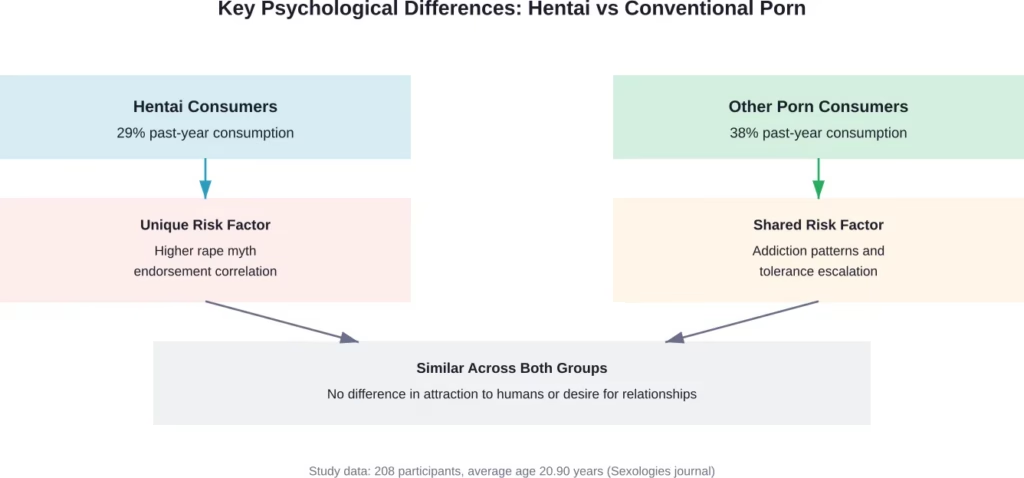
A study published in the journal Sexologies examined how hentai consumers differ from those who view other types of pornography. The research was based on survey responses from 208 participants with an average age of 20.90 years.
The findings were revealing.
Approximately 29% of participants had consumed hentai in the past year, while 38% had consumed non-hentai pornography. This suggests hentai represents a significant portion of overall pornography consumption, particularly among younger adults.
But the differences went beyond consumption rates.
Psychological Characteristics of Hentai Users
According to research from PsyPost, people who consume hentai appear to differ on several characteristics from those who consume other types of pornography. However, they don’t appear to differ from others in their attraction toward humans or their desire for human relationships.
This challenges the common assumption that hentai consumption indicates social withdrawal or inability to form real relationships.
The research suggests hentai consumers may be drawn to this content for reasons related to the medium itself—the fantasy elements, the artistic style, or the specific content available—rather than as a substitute for human connection.
The Rape Myth Connection
More concerning research published in the Journal of Interpersonal Violence examined the relationship between hentai pornography use, rape myths endorsement, and sexually aggressive strategies.
The study found that hentai consumption was linked to greater acceptance of rape myths—false beliefs about sexual assault that minimize perpetrator responsibility and blame victims.
Research cited in the Journal of Interpersonal Violence study notes that one study reported one-third of American male college students had perpetrated some form of sexual assault in the dating context. A survey conducted by the Association of American Universities reports that 13% of nearly 182,000 students surveyed had experienced non-consensual sexual interaction.
The study aimed to test whether hentai pornography use correlated with these attitudes and behaviors through rape myth endorsement.
The findings suggest a concerning trajectory where certain types of hentai content—particularly those depicting non-consensual scenarios—may reinforce dangerous attitudes about sexuality and consent.
The Mental Health Impact of Both Forms
Comparing hentai to conventional pornography misses an important point: both can be problematic for mental health and relationships.
The question shouldn’t be which is worse, but rather how each affects the brain and behavior.
Common Ground: Addiction Mechanisms
Both hentai and conventional pornography activate the same reward pathways in the brain. Dopamine floods the system during arousal and orgasm, creating powerful reinforcement patterns.
With repeated exposure, the brain adapts. Tolerance builds. What once provided intense pleasure now feels merely adequate.
This neurological process happens regardless of whether the content is animated or live-action. The addiction mechanism operates the same way.
The Desensitization Cycle
Regular pornography consumption—whether hentai or conventional—can lead to desensitization. Sexual content that initially seemed extreme gradually becomes normalized.
Studies show that approximately 80% of American high school students, 70% of Dutch adolescents, and 48% of 11-16-year-olds in the UK have reported first exposure to pornography.
First exposure typically occurs in early adolescence, setting the stage for years of potential consumption during critical developmental periods.
This widespread exposure raises concerns about how pornography—in all its forms—shapes sexual development, expectations, and relationship patterns.
Reality Distortion and Relationship Impact
Both hentai and conventional pornography can distort perceptions of sex and relationships, though in different ways.
Conventional porn creates unrealistic expectations about bodies, performance, and sexual scenarios. Professional actors in controlled settings with careful editing don’t represent typical sexual experiences.
Hentai takes this distortion further by completely abandoning physical reality. Body proportions become impossible. Sexual stamina becomes superhuman. Consent becomes ambiguous or absent.
Research on Italian youth sexual behavior found that first sexual experiences occurred around age 15, with the median age of first intercourse at 17. The fantasies that most excited respondents included having sex in public and with multiple partners—scenarios heavily featured in pornography.
This correlation between pornography consumption and sexual fantasies suggests both forms of content shape expectations and desires, particularly when exposure begins during formative years.
The Unique Dangers of Hentai Content
While both forms carry risks, hentai presents certain dangers that conventional pornography doesn’t.
Depictions That Cross Legal and Ethical Lines
The animated nature of hentai allows creators to depict scenarios that would be illegal to produce with real people. Characters can be drawn to appear underage. Non-consensual scenarios can be portrayed without legal consequences.
Some argue these are “just drawings” that don’t harm real people. But research into harmful sexual behavior prevention reveals troubling patterns.
According to data from Stop It Now!, 11% of inquiries were from youth asking for help with their sexual interests and behaviors toward younger children. These youth often reported exposure to sexual content depicting minors.
The normalization of problematic content—even in animated form—can reinforce dangerous thought patterns and desires.
The Fantasy Escalation Trap
Hentai’s unlimited creative freedom means content can escalate without bounds. Categories exist that depict extreme scenarios impossible in reality.
For some consumers, this represents the appeal. Fantasy provides a safe outlet, they argue, for desires that shouldn’t be acted upon.
But psychological research suggests repeated exposure to extreme content can shift internal norms. What begins as shocking gradually becomes acceptable, then eventually necessary for arousal.
This escalation pattern appears more pronounced with hentai than conventional porn precisely because the content can become progressively more extreme without hitting the reality ceiling that limits live-action production.
Detachment from Human Sexuality
Some clinicians working with pornography addiction report that hentai consumers sometimes develop preferences so specific to the animated medium that real human partners become less appealing.
The perfect proportions, specific art styles, and fantasy elements that characterize hentai don’t exist in reality. Real bodies, with their variations and imperfections, may fail to generate the same arousal response.
This detachment doesn’t happen to everyone who views hentai. But it represents a documented concern among those treating sexual behavior problems.
The Unique Dangers of Conventional Pornography
Conventional pornography comes with its own set of specific harms that hentai doesn’t necessarily share.
The Exploitation Factor
Live-action pornography involves real people. Behind the scenes, the industry has documented problems with exploitation, coercion, and trafficking.
Performers may face pressure to participate in scenarios they’re uncomfortable with. Economic desperation drives some into the industry against their better judgment. Consent becomes murky when financial pressure enters the equation.
Hentai doesn’t involve real performers, eliminating this particular ethical concern. No one is exploited in the creation of animated content.
For some people, this represents a significant moral distinction. The consumption of conventional pornography potentially supports an industry with documented human rights concerns.
Body Image and Performance Anxiety
Conventional pornography features real bodies—but highly atypical ones. Professional performers are selected for specific physical attributes. Cosmetic surgery, special lighting, camera angles, and editing create an unrealistic presentation.
Research on sexualization of girls has linked exposure to idealized media images with common mental health problems including body dissatisfaction, eating disorders, and depression.
Conventional porn contributes to these unrealistic standards by presenting carefully curated bodies as the norm. Viewers—particularly young ones—compare themselves unfavorably and develop insecurities.
Hentai, being animated, doesn’t necessarily create the same comparison problem. Viewers generally recognize cartoon characters aren’t real references for comparison.
The Immediacy of Imitation
Conventional pornography depicts scenarios that, while often unrealistic, are technically possible. Viewers may attempt to recreate what they’ve watched with real partners.
This can lead to uncomfortable situations when one partner expects behaviors seen in pornography that the other partner isn’t interested in or comfortable with.
Research on adolescent exposure to sexually explicit material has found correlations between pornography consumption and earlier sexual initiation, more permissive attitudes, and increased likelihood of risky sexual behaviors.
The imitation effect appears more direct with conventional pornography because the scenarios, while unrealistic, involve real humans performing acts that viewers can theoretically attempt.
| Comparison Factor | Hentai | Conventional Pornography |
|---|---|---|
| Performer Exploitation Risk | None (animated content) | Significant industry concerns |
| Content Extremity Potential | Unlimited (no reality constraints) | Limited by physical reality |
| Body Image Impact | Lower (recognized as fictional) | Higher (unrealistic but real bodies) |
| Addiction Mechanism | Same dopamine-driven pathways | Same dopamine-driven pathways |
| Rape Myth Endorsement | Higher correlation in studies | Moderate correlation in studies |
| Escalation Pattern | Often more rapid (no ceiling) | Gradual but reality-limited |
| Impact on Human Attraction | No significant difference | No significant difference |
Signs of Problematic Consumption
Whether someone consumes hentai, conventional pornography, or both, certain warning signs indicate the behavior has become problematic.
Time and Frequency Indicators
Consumption becomes concerning when it interferes with daily responsibilities. Missing work, neglecting relationships, or abandoning hobbies to view sexual content suggests problematic use.
Frequency alone doesn’t define addiction—some people can view pornography occasionally without issues. But escalating frequency despite negative consequences indicates a problem.
Inability to Stop or Reduce
Attempting to quit or cut back but repeatedly failing represents a hallmark of addictive behavior. This applies equally to hentai and conventional pornography.
Many people recognize their consumption has become excessive but find themselves unable to change the pattern despite genuine effort.
Sexual Dysfunction with Partners
Difficulty achieving arousal or orgasm with real partners—while having no trouble with pornography—suggests problematic conditioning.
This can manifest as erectile dysfunction in men or arousal difficulties in women when pornography isn’t involved, while sexual function remains normal during solo pornography use.
Escalation to Extreme Content
Finding that previously arousing content no longer works, requiring increasingly extreme material, indicates tolerance development.
This escalation pattern happens with both hentai and conventional pornography, though the trajectory may differ.
Emotional Dependence
Using pornography as the primary coping mechanism for stress, loneliness, boredom, or negative emotions suggests unhealthy dependence.
Sexual content becomes a way to regulate mood rather than an occasional source of pleasure.
How to Address Problematic Consumption
Recognizing a problem represents the first step. Actually changing the behavior requires deliberate effort and often professional support.
Self-Directed Approaches
For some people, self-directed behavior change works. Strategies include installing content filters, changing internet usage patterns, and developing alternative coping mechanisms.
Accountability partnerships—where someone regularly checks in with a trusted friend or family member—help some people maintain their commitment to change.
Physical exercise, meditation, and other stress-reduction techniques can address the emotional regulation function that pornography often serves.
But self-directed approaches work best for mild to moderate problems. When consumption has become compulsive, professional help typically becomes necessary.
Professional Treatment Options
Several therapeutic approaches have shown effectiveness for pornography-related problems.
Cognitive-behavioral therapy helps identify the thoughts and situations that trigger pornography use, then develops alternative responses.
Acceptance and commitment therapy focuses on accepting urges without acting on them, while committing to values-aligned behaviors.
Sex therapy specifically addresses how pornography consumption has affected sexual functioning and relationship intimacy.
Group therapy provides peer support from others facing similar struggles, reducing the isolation and shame that often accompanies these problems.
Addressing Underlying Issues
Pornography consumption often serves as a coping mechanism for underlying problems: anxiety, depression, trauma, loneliness, or relationship dissatisfaction.
Treatment that only addresses the pornography use without tackling these root causes typically fails. The behavior returns because the underlying need remains unmet.
Comprehensive treatment assesses what emotional or psychological functions pornography serves, then develops healthier ways to meet those needs.
Recovery Is Possible
Whether someone struggles with hentai, conventional pornography, or both, recovery is absolutely possible.
Research into prevention interventions for youth with concerns about sexual thoughts and behaviors shows that early intervention and appropriate support significantly improve outcomes.
The process isn’t easy. Pornography creates powerful neural pathways that take time to weaken. Urges persist even after the decision to quit.
But with appropriate support, consistent effort, and patience with the inevitable setbacks, people do successfully change their relationship with pornography.
The Role of Shame and Secrecy
One factor that makes pornography problems harder to address is the intense shame surrounding the topic.
According to research on barriers to parent-child pornography conversations, shame represents the biggest obstacle to seeking help. People feel embarrassed about their consumption patterns and fear judgment.
This shame keeps the behavior secret. And secrecy prevents accountability, support, and treatment.
Breaking the Silence
Opening up about pornography struggles—whether with a trusted friend, family member, or therapist—often represents the turning point toward recovery.
The relief of no longer carrying the secret alone can be profound. And accountability naturally follows disclosure.
Support groups, both in-person and online, provide spaces where people can discuss these issues without judgment. Hearing others share similar experiences reduces the sense of isolation.
Reframing the Conversation
Pornography consumption exists on a spectrum. Not everyone who views sexual content has a problem. But significant numbers do struggle with compulsive use.
Reframing this as a common struggle rather than a moral failure reduces shame and increases willingness to seek help.
The question isn’t whether someone is “bad” for consuming pornography. The question is whether the behavior serves their wellbeing and aligns with their values.
Prevention: A Better Approach Than Treatment
While treatment can help those already struggling, prevention offers a better strategy—particularly for young people.
Early Education About Sexual Content
Research consistently shows most people first encounter pornography during adolescence or even earlier. Waiting until adulthood to discuss these topics leaves young people without guidance during critical exposure periods.
Age-appropriate conversations about sexual content should begin before first exposure, not after. These discussions should cover what pornography is, how it differs from real sexuality, and why it can become problematic.
Media Literacy Skills
Teaching young people to critically evaluate media—including sexual content—helps them recognize the constructed, unrealistic nature of pornography.
Understanding that pornography is performance designed to create arousal, not education about real sexuality, provides important context.
Healthy Sexuality Education
Comprehensive sexuality education that addresses relationships, consent, communication, and realistic expectations provides a foundation that makes pornography’s distortions more obvious.
When young people have accurate information about sexuality, they’re better equipped to recognize pornography’s departures from reality.
Frequently Asked Questions
Is hentai actually worse than regular porn?
Neither is objectively “worse”—both carry distinct risks. Hentai can normalize more extreme content due to its unlimited creative freedom and shows higher correlation with rape myth endorsement in research. Conventional pornography involves potential performer exploitation and creates unrealistic body standards. Both activate the same addiction mechanisms and can distort sexuality. The impact depends on individual vulnerability, consumption patterns, and content type.
Can watching hentai affect real-life relationships?
Research indicates hentai consumers don’t differ from others in attraction to humans or desire for relationships. However, like all pornography, heavy hentai consumption can create unrealistic expectations, reduce partner satisfaction, and cause sexual dysfunction. The animated nature may create preferences so specific that real partners become less appealing for some individuals. Moderate use appears less likely to cause relationship problems than compulsive consumption.
Why is hentai so addictive?
Hentai activates the same dopamine-driven reward pathways as conventional pornography. The addiction mechanism is identical—repeated activation of pleasure centers creates tolerance, requiring more frequent or intense stimulation. Hentai’s unlimited content extremity may accelerate escalation patterns since no reality ceiling limits how intense material can become. The fantasy elements and specific art styles can create highly conditioned arousal responses.
Does hentai promote dangerous sexual attitudes?
Research published in the Journal of Interpersonal Violence found hentai consumption correlated with greater endorsement of rape myths—false beliefs that minimize sexual assault. Content depicting non-consensual scenarios, characters drawn to appear underage, or extreme power imbalances can normalize problematic attitudes. However, not all hentai depicts harmful scenarios, and consumption doesn’t automatically create dangerous attitudes. The correlation suggests concerning patterns worth examining.
How do I know if my pornography use is a problem?
Warning signs include: consumption interfering with responsibilities or relationships, inability to stop despite wanting to, requiring increasingly extreme content for arousal, sexual dysfunction with real partners, and using pornography as the primary emotional coping mechanism. If consumption causes distress, consumes significant time, or conflicts with personal values, it’s worth examining. Professional assessment can help determine whether use has become compulsive.
Can someone recover from hentai or porn addiction?
Recovery is absolutely possible with appropriate support. Treatment options include cognitive-behavioral therapy, acceptance and commitment therapy, sex therapy, and support groups. Self-directed approaches work for mild problems, while compulsive use typically requires professional help. Recovery involves weakening established neural pathways, addressing underlying emotional needs, and developing healthier coping mechanisms. The process takes time and persistence, but people successfully change their relationship with pornography regularly.
Is watching hentai illegal?
Legal status varies by jurisdiction. In most places, hentai depicting adults in consensual scenarios is legal. However, content depicting characters drawn to appear underage violates laws in many countries, even though no real children are involved. Some jurisdictions criminalize extreme content regardless of the animated nature. Laws differ significantly between countries and even within regions. Anyone concerned about legal status should research their specific jurisdiction’s laws.
Moving Forward With Awareness
The question “is hentai worse than porn” doesn’t have a simple answer because both forms carry distinct risks and potential harms.
Hentai’s animated nature eliminates performer exploitation but allows unlimited content extremity. Research links it to rape myth endorsement and potentially faster escalation patterns.
Conventional pornography involves real people, raising ethical concerns about industry practices, while creating unrealistic body standards and performance expectations.
Both activate identical addiction mechanisms. Both can distort perceptions of sexuality. Both can interfere with real relationships and sexual functioning.
The impact depends less on which form someone consumes and more on consumption patterns, individual vulnerability, and the specific content involved.
For those struggling with either form, shame and secrecy keep problems hidden. Breaking that silence—through trusted relationships or professional support—opens the path to recovery.
Prevention through early education, media literacy, and comprehensive sexuality information offers the best long-term strategy.
Understanding these issues without judgment creates space for honest conversations about sexual content consumption and its impacts. That awareness represents the first step toward healthier patterns, whether for individuals currently struggling or for preventing problems before they develop.
If consumption of any sexual content—hentai, conventional pornography, or other forms—is causing distress or interfering with life, professional support is available and recovery is genuinely possible.