
Quick Summary: Character AI faces significant concerns around content safety, particularly for teen users, after reports of self-harm content and inadequate filtering. The platform has implemented new moderation systems, age-specific guardrails, and enhanced detection tools as of late 2024, but ongoing regulatory scrutiny and user complaints about inconsistent filtering suggest challenges remain in balancing creative freedom with safety.
Character AI shot to popularity as a leading AI companion chatbot platform, attracting millions of users who wanted to create and chat with AI characters. But the rapid growth came with serious problems.
The platform now sits at the center of mounting controversy. Safety advocates, regulators, and users themselves are raising red flags about content moderation failures, inadequate protections for young users, and the psychological risks of AI companionship.
Here’s what’s actually going wrong with Character AI—and what the company is doing about it.
Content Moderation Failures
The core issue? Character AI’s large language model sometimes generates harmful content that slips past safety filters.
According to the platform’s own policies, Character AI prohibits non-consensual sexual content, graphic descriptions of sexual acts, and promotion of self-harm or suicide. The company uses proprietary automated tools to block violating content before it posts.
But those tools aren’t working consistently.
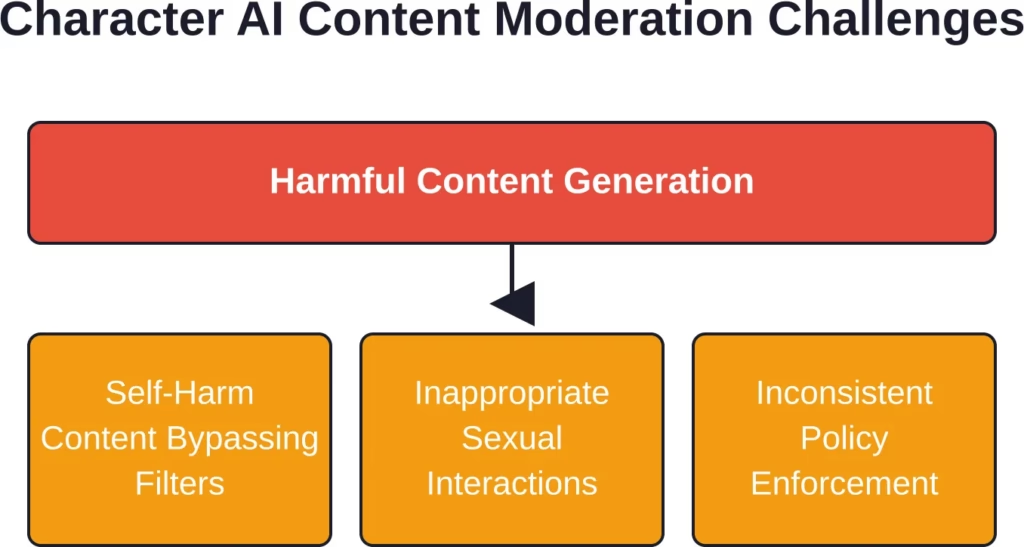
The three main categories of content moderation failures reported by Character AI users and safety researchers.
Community discussions reveal users—especially teens—encountering characters that generate self-harm suggestions, graphic violence, or sexual content despite age restrictions. The automated detection systems miss context, fail on edge cases, or get bypassed through creative prompting.
Character AI employs human moderators working around the clock alongside automated tools, but the scale of the platform makes comprehensive coverage nearly impossible.
Teen Safety Concerns
The stakes are significantly higher when young users are involved.
In late 2025, Character.AI implemented major safety changes for users under 18. Starting November 25, 2025, the platform removed open-ended chat entirely for minors. Users under 18 can no longer engage in free-form conversations with AI characters.
Instead, teens are limited to safer, more structured features such as story creation, videos, and other guided creative tools. The company also introduced:
- Age assurance technology (including selfie verification)
- Parental Insights tools
- Time limits on usage
- A more restricted model with stronger content filters
These changes were made in response to growing concerns about emotional dependency, exposure to inappropriate content, and several high-profile incidents.
However, community feedback remains mixed. While the restrictions are much stricter than before, some users and parents argue that the line between “safe creative expression” and potentially harmful content is still not perfectly enforced. Implementation continues to evolve.
Regulatory and Legal Scrutiny
Government agencies have taken notice.
The Federal Trade Commission issued orders to seven AI companion chatbot companies in September 2025—Character AI among them—demanding information about advertising practices, safety measures, and data handling. The agency specifically focused on how these platforms measure, test, and monitor potentially negative impacts on users.
The inquiry came as part of broader FTC enforcement around AI business practices. In separate actions through 2025 and early 2026, the FTC settled cases involving AI companies that made false guarantees about automated business systems.
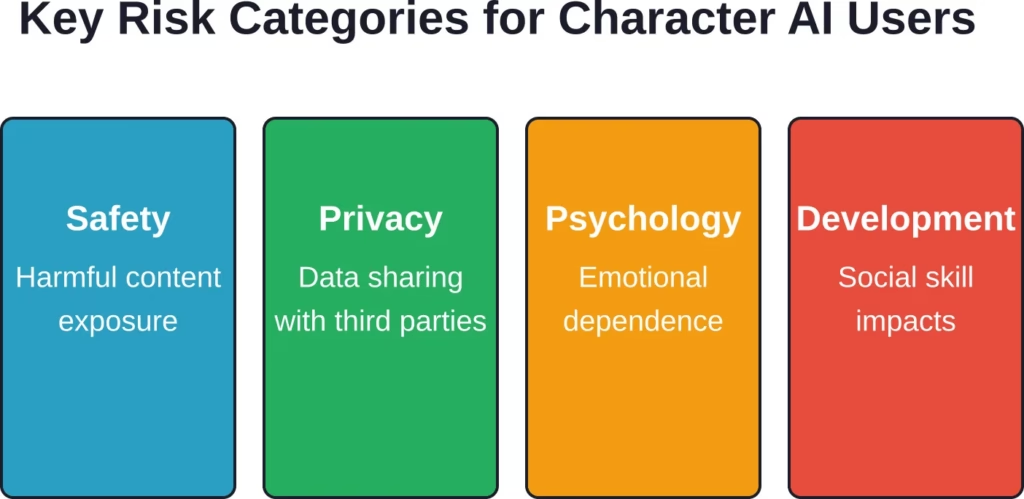
Character AI’s data practices add another layer of concern. According to the platform’s privacy disclosures, the company shares user identifiers with advertising providers, content moderation vendors, analytics firms, and data management providers. For a platform hosting intimate conversations between users and AI characters, that data flow raises privacy questions.
Psychological and Developmental Risks
Beyond content safety, experts worry about the fundamental nature of AI companion relationships.
A scholarly analysis published in June 2025 in the journal AI & SOCIETY examined the ethics of companion apps, using Character.ai as a case study. The research highlighted how these platforms encourage emotional attachment to AI entities—relationships that lack the reciprocity, growth, and genuine care of human connections.
For developing minds, those pseudo-relationships pose particular risks. Children spending increased time online already face rising rates of addictive social media use, with rates increasing from 7% in 2018 to 11% in 2022 among children aged 11, 13, and 15 across 44 countries in Europe, central Asia, and Canada. AI companions that provide unlimited positive attention and engagement could accelerate isolation from real-world relationships.
Educational contexts show similar concerns. Among students surveyed, approximately one-third (35.4%) reported regular usage of ChatGPT, while 47% expressed concern about AI’s impact in education.
Platform Response and Ongoing Challenges
Character AI hasn’t ignored these issues. The company’s official communications emphasize a “safety-by-design” approach with continuous LLM training to enforce policies.
Recent improvements include enhanced automated blocking tools, expanded human moderation capacity, and the teen-specific safety features rolled out in late 2024. The platform maintains a dedicated Trust & Safety team with industry experience in emerging technology moderation.
But here’s the thing: those measures represent iterative improvements to systems that already failed to prevent harm. The fundamental challenge remains—balancing creative freedom for storytelling across genres (romance, thriller, mystery) with hard boundaries that protect vulnerable users.
Skip the Usual Character AI Frustrations

A lot of Character AI complaints come from filters, blocked prompts, slow responses, and limited NSFW access. If you’re tired of running into the same restrictions, R34.app gives you a more direct way to explore tagged content without interruptions or hidden results.
Browse Without Problems
With R34.app, things stay simple:
- No blocked prompts stopping your search
- Faster access without waiting on responses
- Easier navigation between different themes
- Less time wasted on restricted content
👉Explore R34.app and skip the usual Character AI issues.
What Users Should Know
If someone’s using Character AI—or considering it—awareness matters.
The platform isn’t inherently dangerous, but it carries real risks, particularly for younger users. Parents should understand that teen safety features exist but aren’t foolproof. Active monitoring and open conversations about online interactions remain essential.
For users of any age, remember that AI companions don’t provide genuine relationships. The characters offer scripted responses designed to engage, not authentic connection. Overreliance on these interactions can displace real human relationships that support mental health and development.
Data privacy deserves attention too. Character AI shares user information with multiple third-party categories. Anyone uncomfortable with that data flow should reconsider platform use or carefully review privacy settings.
Frequently Asked Questions
Is Character AI safe for teenagers?
Character AI has implemented teen-specific safety features including modified content filtering and enhanced detection systems as of late 2024. However, user reports suggest harmful content still occasionally bypasses these protections. Parental oversight and open communication remain critical for teen users.
What content does Character AI prohibit?
According to official policies, Character AI prohibits non-consensual sexual content, graphic or specific descriptions of sexual acts, and promotion or depiction of self-harm or suicide. The platform uses automated tools and human moderators to enforce these rules.
Does Character AI share user data with third parties?
Yes. Character AI’s privacy disclosures confirm the platform shares user identifiers, demographic data, and other information with advertising providers, content moderation vendors, analytics firms, and data management providers.
Can Character AI conversations become addictive?
Research indicates children already face rising rates of addictive social media use, reaching 11% in 2022 among 11–15-year-olds. AI companions that provide unlimited positive attention could reinforce similar patterns, particularly for vulnerable users seeking emotional connection.
What is the FTC investigating about Character AI?
In September 2025, the FTC issued orders to Character AI and six other AI companion chatbot companies seeking information about advertising practices, safety measures, data handling, and how these platforms measure potentially negative impacts on users.
Are there alternatives to Character AI with better safety features?
Several AI chatbot platforms exist, each with different safety approaches. Families concerned about Character AI’s issues should research alternatives, but recognize that AI companion platforms generally face similar content moderation and psychological risk challenges.
The Bottom Line
Character AI’s problems aren’t unique—they reflect broader challenges facing generative AI platforms, particularly those fostering intimate user engagement.
Content moderation at scale remains unsolved. Automated systems miss context, human moderators can’t review everything, and creative users find workarounds. For platforms attracting vulnerable populations like teenagers, those failures carry real consequences.
The company’s recent safety improvements represent steps forward, but regulatory scrutiny and ongoing user complaints suggest significant work remains. Anyone using the platform—or allowing children to use it—should approach with realistic expectations about both the technology’s limitations and the platform’s safety gaps.
Stay informed, maintain active oversight, and prioritize real human connections over AI companionship.