
Quick Summary: Fictional hentai content, including depictions of rape, is legal in most Western countries including the United States under First Amendment protections, provided it does not involve real people or photorealistic depictions of real minors. Federal obscenity laws exist but are rarely enforced against animated content. Legal status varies by jurisdiction, with some countries maintaining stricter regulations on fictional pornography.
Understanding Federal Obscenity Laws
The legal landscape surrounding hentai depicting rape centers on the distinction between fictional and real content. According to the Department of Justice, federal obscenity laws apply to all pornographic material, including animated content. The Supreme Court has ruled that “transmitting obscenity and child pornography, whether via the Internet or other means, is illegal under federal law for both adults and juveniles.”
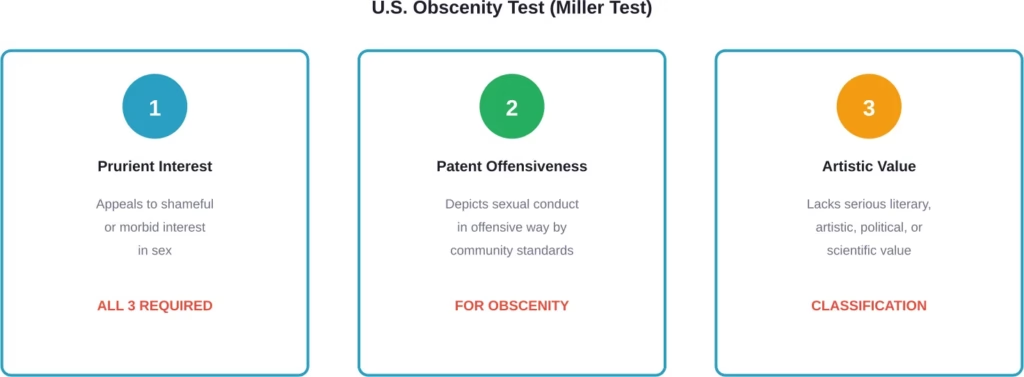
But here’s where it gets complicated. Federal statutes including 18 U.S.C. § 1460, § 1461, and § 1462 address possession, sale, and importation of obscene matter. The definition of “obscene” requires three prongs: appeal to prurient interest, depiction of sexual conduct in a patently offensive way, and lack of serious literary, artistic, political, or scientific value.
Enforcement against fictional animated pornography remains extremely rare. The First Amendment provides substantial protection for artistic expression, even when that expression depicts disturbing scenarios.
Use One Interface to Browse Tagged Adult Content

R34.app acts as a content hub for tag-based browsing. Instead of checking multiple sites separately, users can search and explore categories, trending posts, and animated content in one place.
Looking for a Centralized Tag Browser?
R34.app can help with:
- browsing tagged fandom content
- unrestricted access to visual NSFW content
- using one interface for multiple sources
👉 Visit R34.app to explore its tag-based browsing system
Hentai vs. Real Content: Key Legal Distinctions
The critical legal difference lies in whether real people are depicted. Animated hentai involves zero actual victims, which fundamentally changes the constitutional analysis. Courts have consistently recognized that fictional expression receives stronger First Amendment protection than photographic pornography.
Community discussions frequently note confusion about this distinction. Popular hentai series like “Rape Gouhouka” depict fictional scenarios where rape becomes legalized—a dystopian fantasy premise. These animations remain legal to produce and consume in the United States because they’re entirely fictional creations.
International Legal Variations
Legal status varies dramatically worldwide. Some jurisdictions prohibit fictional pornography depicting minors regardless of artistic medium. Others maintain broad restrictions on any sexually explicit material deemed harmful to societal morals.
| Region | Legal Status | Key Restrictions |
|---|---|---|
| United States | Generally Legal | Must not depict identifiable real minors; obscenity laws apply but rarely enforced |
| United Kingdom | Restricted | Cartoon/fictional child pornography illegal under Coroners and Justice Act 2009 |
| Canada | Gray Area | Courts divided on whether fictional depictions constitute child pornography |
| Australia | Illegal | Fictional depictions of minors in sexual situations classified as child abuse material |
| Japan | Legal | Production and distribution legal; recent discussions about fictional content regulation |
Why Enforcement Remains Rare
Despite theoretical federal authority to prosecute obscene animated content, actual enforcement targeting mainstream hentai is virtually nonexistent. According to EFF briefs submitted to the Supreme Court, Section 230 protections and First Amendment considerations create substantial barriers to regulating online expression.
Prosecutorial resources focus overwhelmingly on material involving actual victims. With YouTube users uploading over 500 hours of video each minute and more than 5.66 billion using social media platforms as of 2026, pre-publication review of animated content isn’t feasible.
Real talk: unless material crosses into depicting identifiable real individuals or photorealistic representations of real minors, prosecution risk remains minimal for consumers of animated hentai in the United States.
FAQ: Common Legal Questions
Is watching hentai rape videos illegal in the U.S.?
Watching animated hentai depicting rape is generally legal in the United States under First Amendment protections, as it involves fictional characters. Federal obscenity laws technically apply but are rarely enforced against animated content without real victims.
Can I be prosecuted for downloading hentai?
Prosecution for downloading mainstream hentai is extremely unlikely unless the content depicts photorealistic representations of identifiable real minors. Standard animated hentai falls under protected artistic expression in most jurisdictions.
Does the Miller test apply to anime and manga?
Yes, the Miller obscenity test applies to all pornographic material including anime and manga. However, courts must consider artistic value, and enforcement against fictional animated works remains rare compared to photographic pornography.
Are there any U.S. states where hentai is illegal?
No U.S. state has successfully banned fictional hentai outright. Some states like Virginia maintain obscenity statutes, but these apply the same federal constitutional standards and face First Amendment challenges when enforced against purely fictional content.
What about hentai depicting minors?
This represents the most legally ambiguous area. While some prosecutions have occurred for fictional depictions of minors, courts remain divided on whether purely artistic renderings without real victims constitute illegal child pornography under federal law.
Is selling or distributing hentai different from personal use?
Commercial distribution carries higher theoretical risk under federal statutes 18 U.S.C. § 1460-1462, which address sale and importation of obscene matter. However, enforcement against mainstream hentai distributors remains minimal absent involvement of real victims.
How do platforms like Hanime handle legal compliance?
Platforms hosting hentai content typically operate under Section 230 protections while implementing content policies to prohibit illegal material. They generally allow fictional animated content while restricting photorealistic depictions or content involving real individuals.
Conclusion
The legal status of hentai depicting rape hinges on the fundamental distinction between fictional expression and material involving real victims. In the United States, First Amendment protections extend to animated pornography, making consumption and possession of mainstream hentai legal despite theoretical obscenity laws.
International laws vary significantly, with some countries maintaining stricter prohibitions on fictional sexual content. Before accessing or distributing hentai content, verify the specific laws in your jurisdiction. When in doubt, consult legal counsel familiar with obscenity and First Amendment law in your area.